Write From Dictation
July 4, 2024 2025-08-18 0:18Write From Dictation
Reading Time: 8 minutesPart 3: Listening
WRITE FROM DICTATION
Made Easy
-
Type of recording: audio - 1 sentence only
-
Length of recording: 10 -14 words
-
Number of these tasks: 3 - 4
-
Total Listening Time: 20 - 23 minutes
Write from dictation tests how accurately you can re-construct a sentence you hear in written form, using your knowledge of grammar and vocabulary.
- You will hear a sentence.
- Then type the sentence exactly as you hear it.
- This task tests listening and writing skills
- The timer shows how much time is left for all the listening tasks in the test.
- The audio status box will count down from seven seconds to zero, and then the audio will start.
- While the recording is playing, you can type the sentence exactly as you hear it in the box. Or, you can write the sentence in your erasable booklet and then type it in the box afterwards.
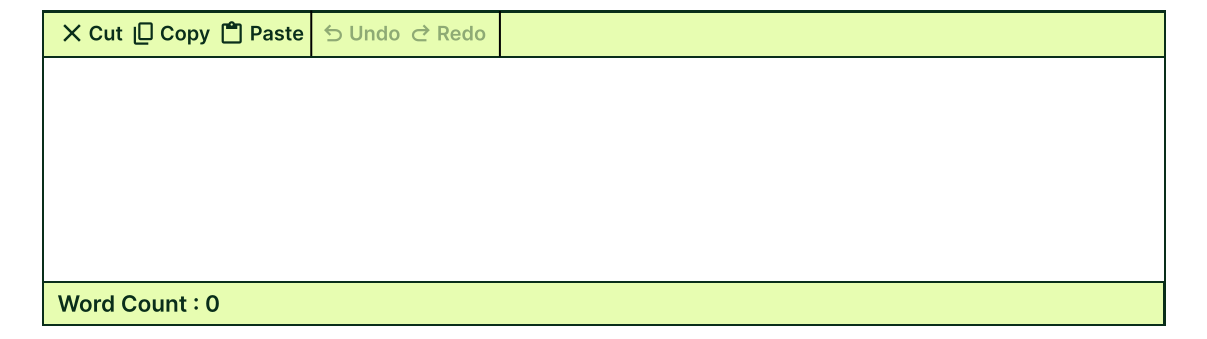
- You can edit text with the ‘Cut’, ‘Copy’ and ‘Paste’ buttons.
- The ‘Total Word Count’ shows the number of words in your sentence.
- Click ‘Next’ to go to the next question after you have checked your answer.
- PTE Academic - Candidate Name
- Time Remaining 00:04:22
- 14 of 16 (10763.2)
You will hear a sentence. Type the sentence in the box below exactly as you hear it. Write as much of the sentence as you can. You will hear the sentence only once.
Write From Dictation Tests Two Skills
-
Listeningup to 13 points
- Understanding details
- Understanding grammar
- Comprehending concrete and abstract information
- Understanding academic vocabulary
-
Writingup to 24 points
- Writing accurately from dictation
- Using accurate grammar, spelling and punctuation
- Using the correct vocabulary
Top Strategies for Success in Write From Dictation
- Before The Test
Ensure that you are confident about spelling.
Review the regular spelling conventions in English. Make a list of words you tend to find difficult to spell, especially words with ie or ei (e.g. piece, receipt), or double-consonant spellings like mm, pp and ss (e.g. communication, disappointed, business). Try to learn words with similar spelling together
Be aware that a lot of words sound similar in English, but have very different spellings and sometimes, different meanings.
Many words have different forms for different parts of speech e.g. severity (noun), severe (adjective), severely (adverb). In the test, you may mishear part of a word, so being able to work out which form of the word is correct and how to spell it can help you.
Being able to guess the spelling of unfamiliar words is important. Try writing down a small number of unfamiliar words you hear in online videos, academic podcasts and lectures. Choose important words that are related to the main theme of the text. Then check the spelling of these words (e.g. with a transcript of the recordings if available, or with a dictionary).
-
Practice TipsFollow To Succeed
You won’t be able to remember the whole sentence so you will need to take notes of the main words while you listen. Practise listening to one-sentence extracts and decide whether you prefer handwriting or typing what you hear. Once you have made the decision, practice your chosen method and stick with it.
Native speakers of English don’t pronounce every single word clearly. However, they do stress important words (usually nouns, verbs and adjectives) more clearly. Practise identifying stressed words in online lectures or podcasts. Pay attention to those words which are pronounced more clearly and see if you can build up a general picture of what the person is talking about.
Practice building up a sentence from stressed words. Listen to a short sentence from an online lecture or podcast. Play it two or three times. As you do so, write down the stressed words that you hear. Don’t try to write down every single word. Then, without listening again, use the stressed words to create the full sentence. Use your knowledge of grammar and smaller words like a, the, of (which are not usually pronounced clearly) to construct the sentence. Then listen again to check your sentence.
Find transcripts of lectures or podcasts to work out the errors in your response. What kind of errors do you tend to make? Are they grammar, punctuation, or vocabulary based? Reflecting on what you write as you practice will help you pinpoint where you need to work on improving your skills.
- During The Test
BEFORE LISTENING
Get ready before the audio status box reaches zero.
- If you are planning to type your notes place the cursor in the box so you are ready to start typing.
- If you are planning to take notes, have the erasable booklet and pen ready.
WHILE LISTENING
As soon as the recording starts, begin taking notes of what you hear. Most importantly, focus on meaning. It’s easier to remember meaning than details such as the grammar of the sentence.
Stick with either handwriting or typing, as you decided in your practice before the test. Write or type as quickly as you can.
Focus on the content words (nouns, verbs, adjectives and adverbs). These are usually stressed in the recording. You don’t have to type or write the whole word now. You can use abbreviations (e.g. dfclt for difficult) and deal with spelling and the minor words (prepositions, articles) later.
FINALLY
Re-read the sentence and check the grammar, spelling, word forms and word order are correct.
Make sure that you have started with a capital letter and ended with a full stop.
Re-read again and check for overall meaning.
AFTER LISTENING
Type the complete sentence into the response box. Use your knowledge of grammar, spelling and vocabulary to re-create anything you missed, such as:
- small words (are, be, to, a, the, etc.)
- word endings (-ed, -ment, -ing, -able, etc.)
- plural endings
- punctuation
Keep an eye on the timer. These are the last tasks of the test, so don’t spend too much time on one and leave not enough time for the others.
Remember, What To Do What Not To Do In Write From Dictation
- You should stick to the writing/typing method you have practised.
- You should not change your method at the last minute
- You should finish note-taking before typing it in full.
- You should not correct mistakes during the recording.
- You should write what you hear.
- You should not write a sentence you memorised before the test. You will score zero for doing this.
- You should spell words correctly.
- You should not worry about British or American spelling. Either form of spelling is OK for this task type. If you hear a sentence with colour in it, you will get the same score for the task whether you type ‘color’ or ‘colour’.
- You should pay attention to vocabulary and grammar.
- You should not forget to check that your sentence makes sense both in meaning and grammatically.
Practice Now With Your Trainer
Practise Write From Dictation 2 here if you want to try Write from dictation without a time limit. Think about the strategies mentioned above. Then follow the task instructions.
- PTE Academic - Candidate Name
- Time Remaining 00:02:56
- 15 of 16 (10763.2)
You will hear a sentence. Type the sentence in the box below exactly as you hear it. Write as much of the sentence as you can. You will hear the sentence only once.
Reflecting on your practice
1. Use the checklist below to decide what you did well and what you need to practise more. Set aside time to work on each area that you want to improve.
- I was prepared to either type or write before the recording started.
- I started writing as soon as the recording began.
- I focused on meaning while listening.
- I used my grammar, vocabulary and spelling knowledge to write the sentence.
- I checked my sentence for meaning when I finished.
- I checked my sentence for grammar, spelling and punctuation.
2. Check the answer given below. Was your answer correct? Try to think about how you could improve.
You will work as part of a team for this project.
Common Mistakes Problems Errors In Write From Dictation
Points To Remember Listening Tasks
In listening tasks that also assess your writing, you will need to apply your listening skills in English and also think about what you write (relying on your vocabulary), and how you write it (using your knowledge of grammar, spelling and punctuation).
Listening items (apart from Summarize spoken text) are not timed individually. You will have between 20 to 23 minutes for all the listening items (excluding Summarizing Spoken Text). Make sure you practice managing your time effectively across all the tasks, to give yourself sufficient time to complete them
Most Repeated Write From Dictation Questions in 2025
1.
2.
3.
4.
5.
5.
6.
7.
8.
9.
10.
Quick Tips Strategies For Better Score!
You will score points for every correct word that you write in the response box. If you can remember a word but you are not sure where it goes in the sentence, use your knowledge of English grammar to help you decide:

Your response for Write from Dictation is your ability to understand and remember a sentence you hear, and then write it exactly as you hear it, using correct spelling.
Your score on Write from Dictation is based on the following factor:
Content: Does your response include all the words in the sentence and only these words? Content is scored by counting the number of correct words in your response.
If all the words are right and spelled correctly, you receive the maximum score points for this question type. If one or more words are incorrect, partial credit scoring applies.
Note
• This question type affects the scoring of listening and writing. Your speaking skills are not tested by this question type, and your reading skills are only used to read the instructions.
• For more information download the Score Guide.