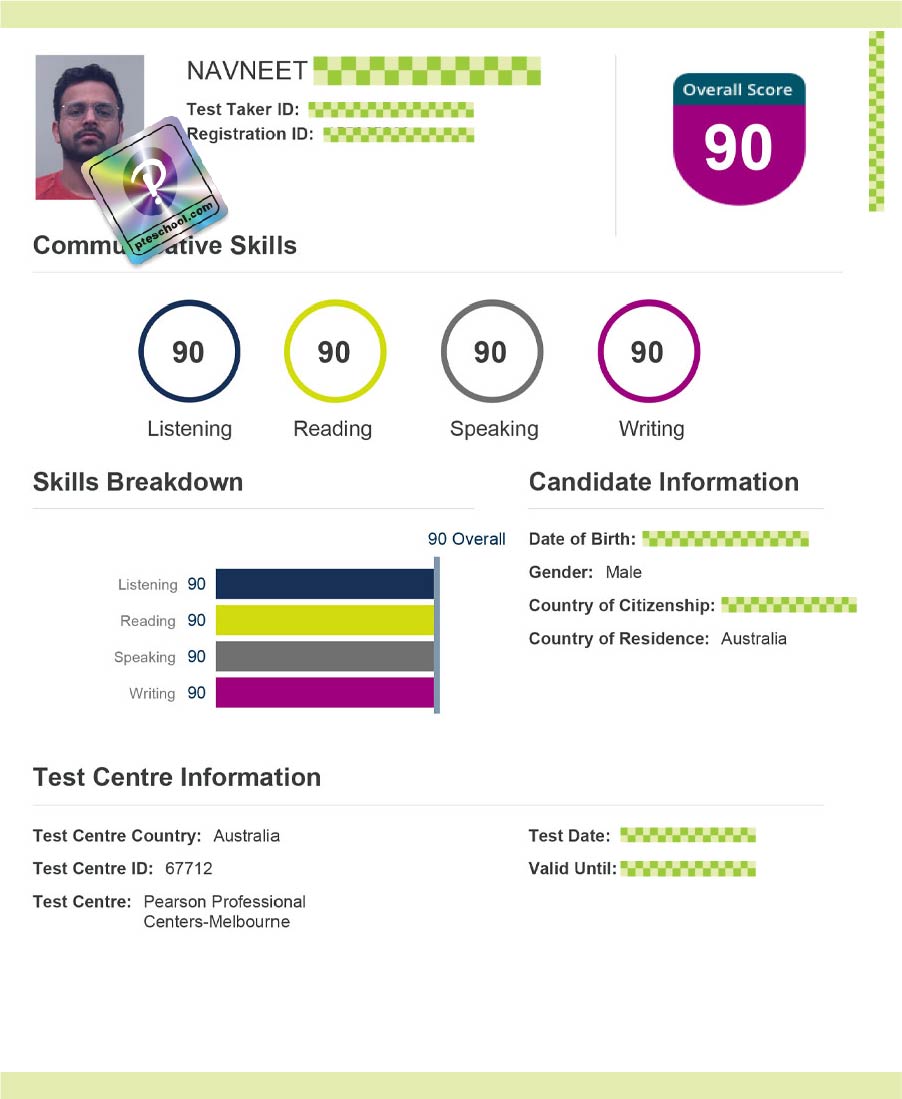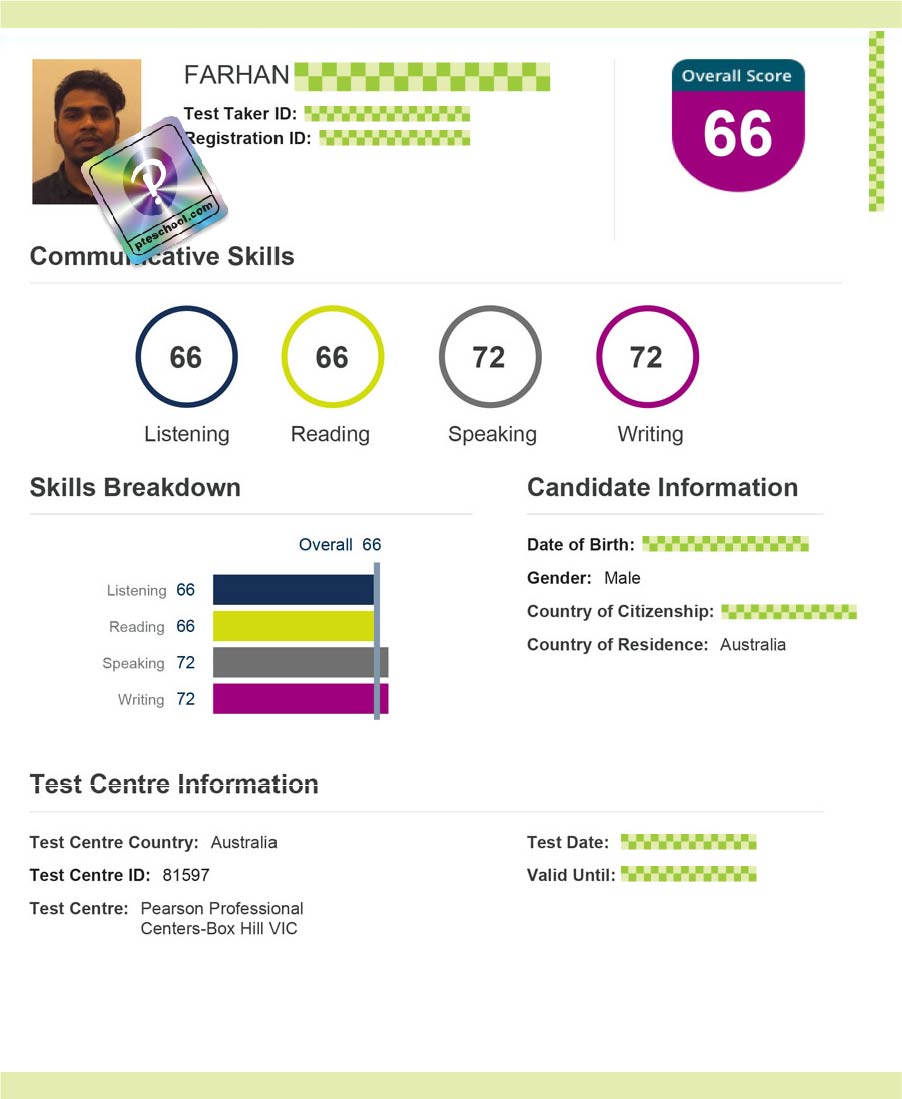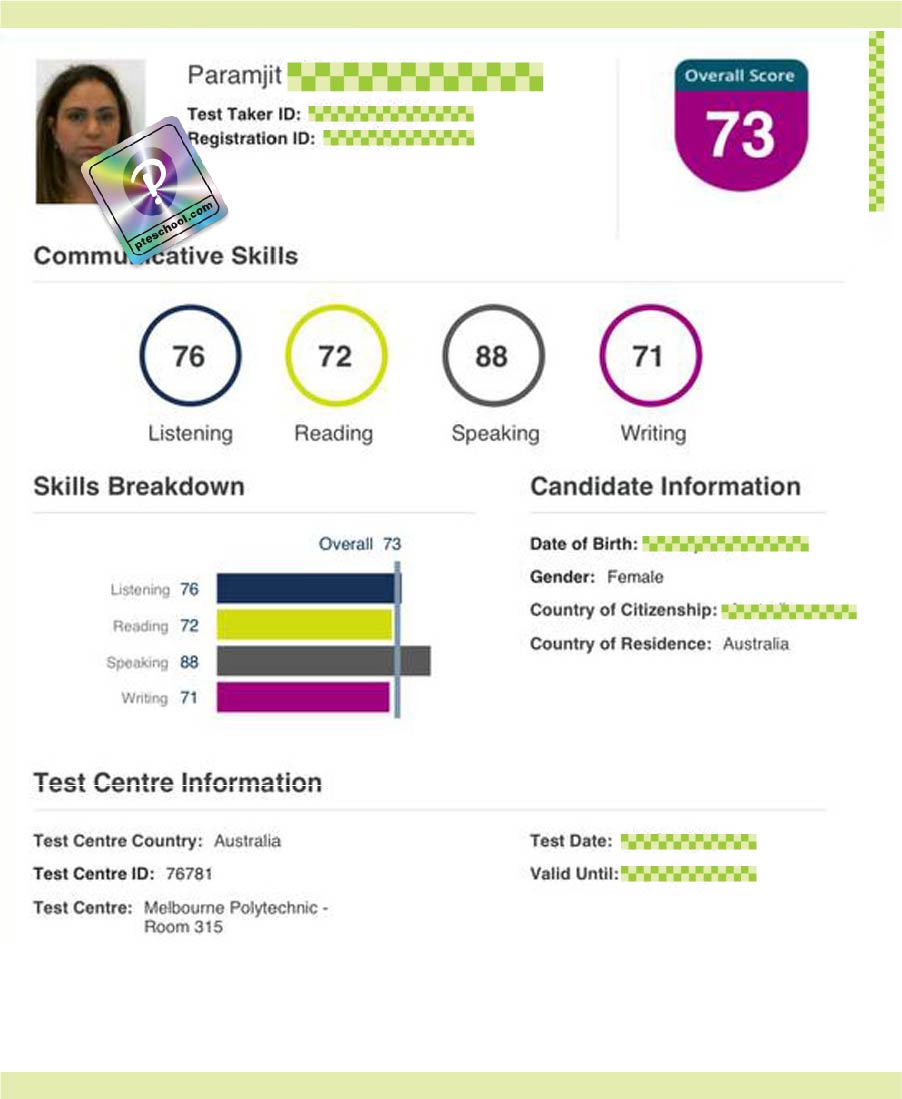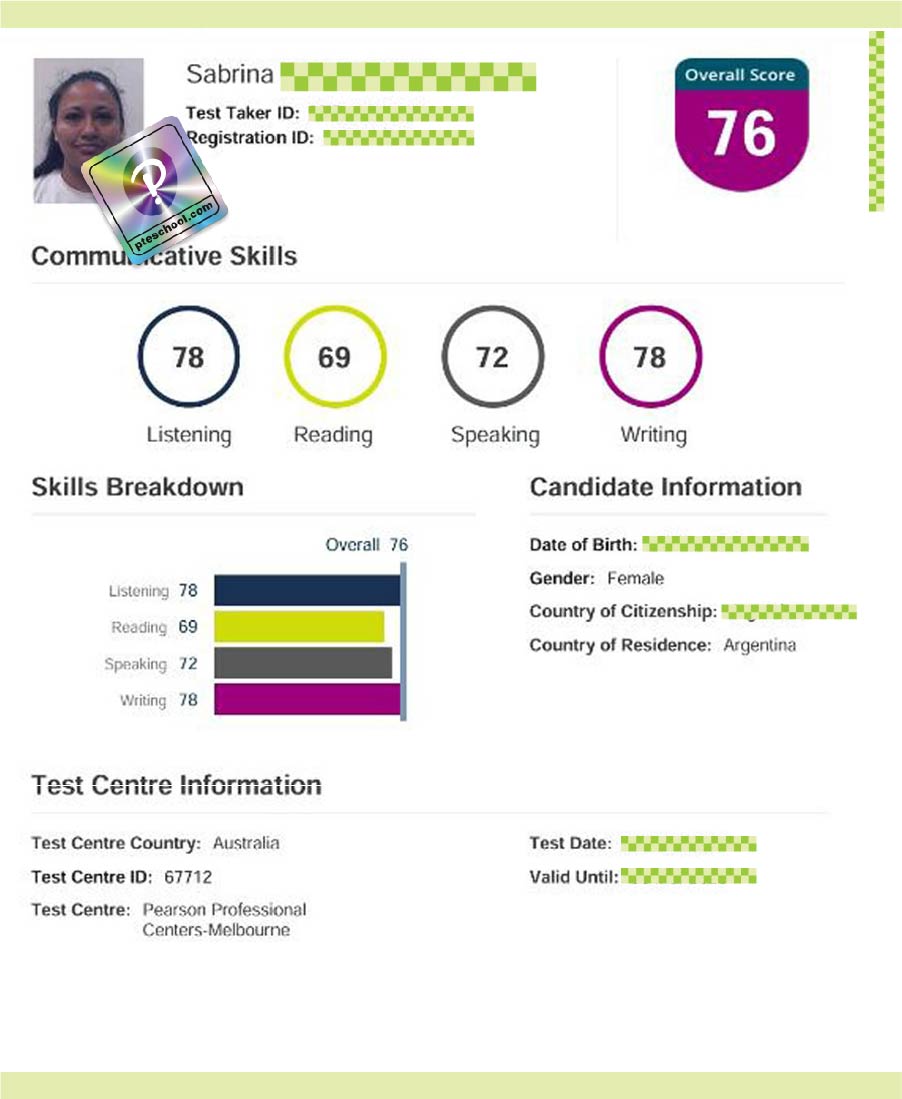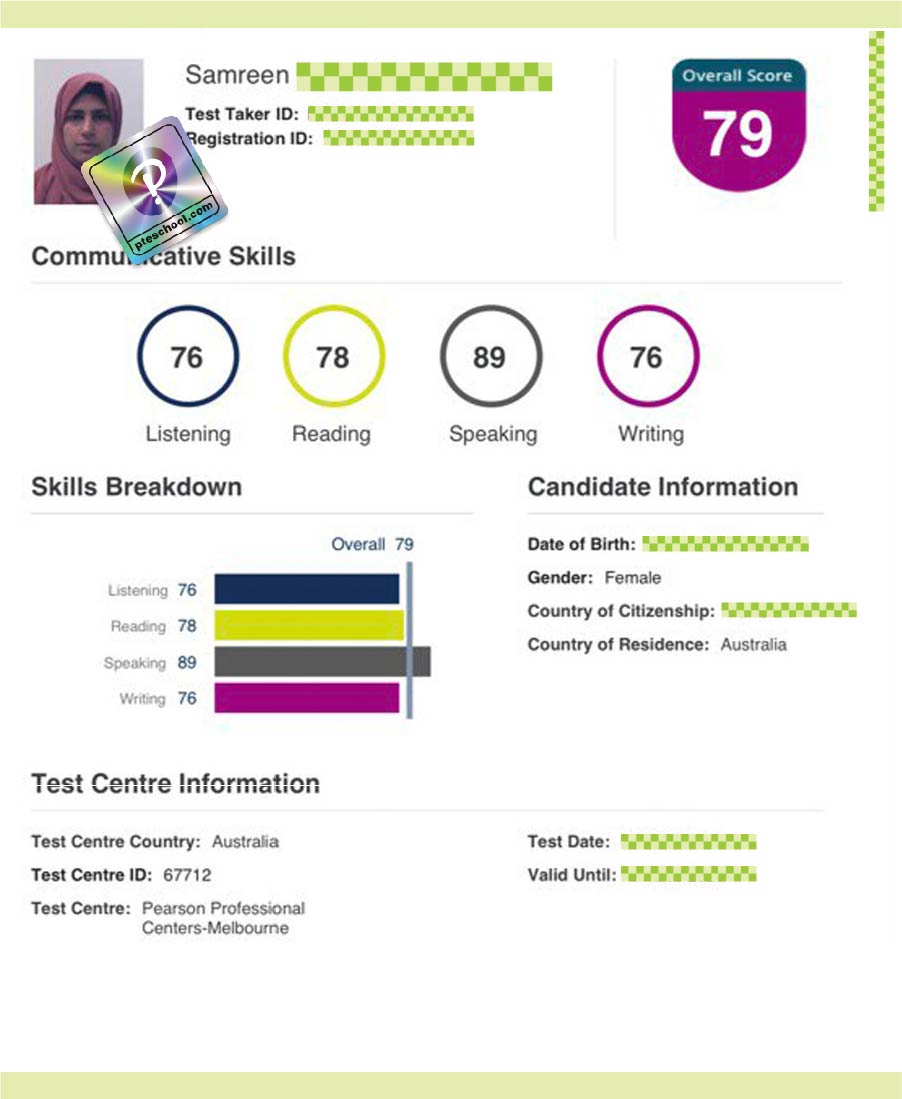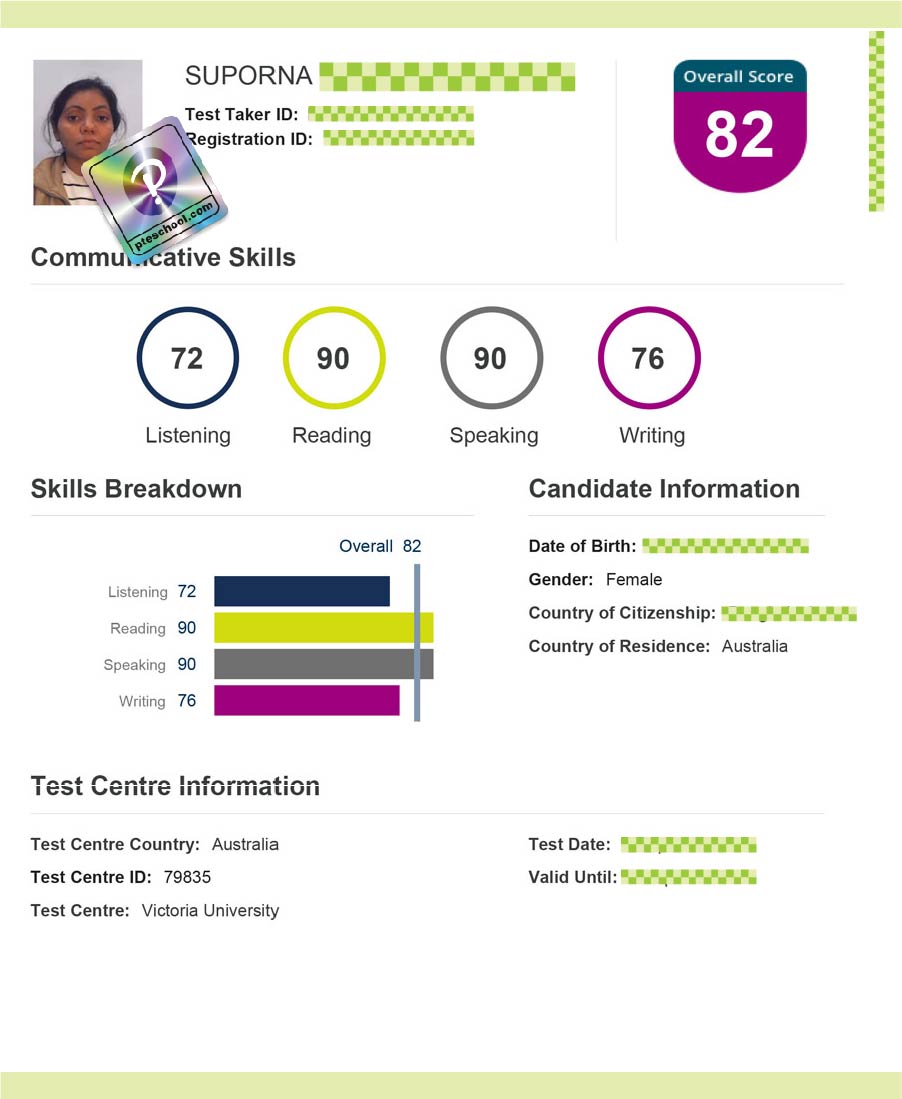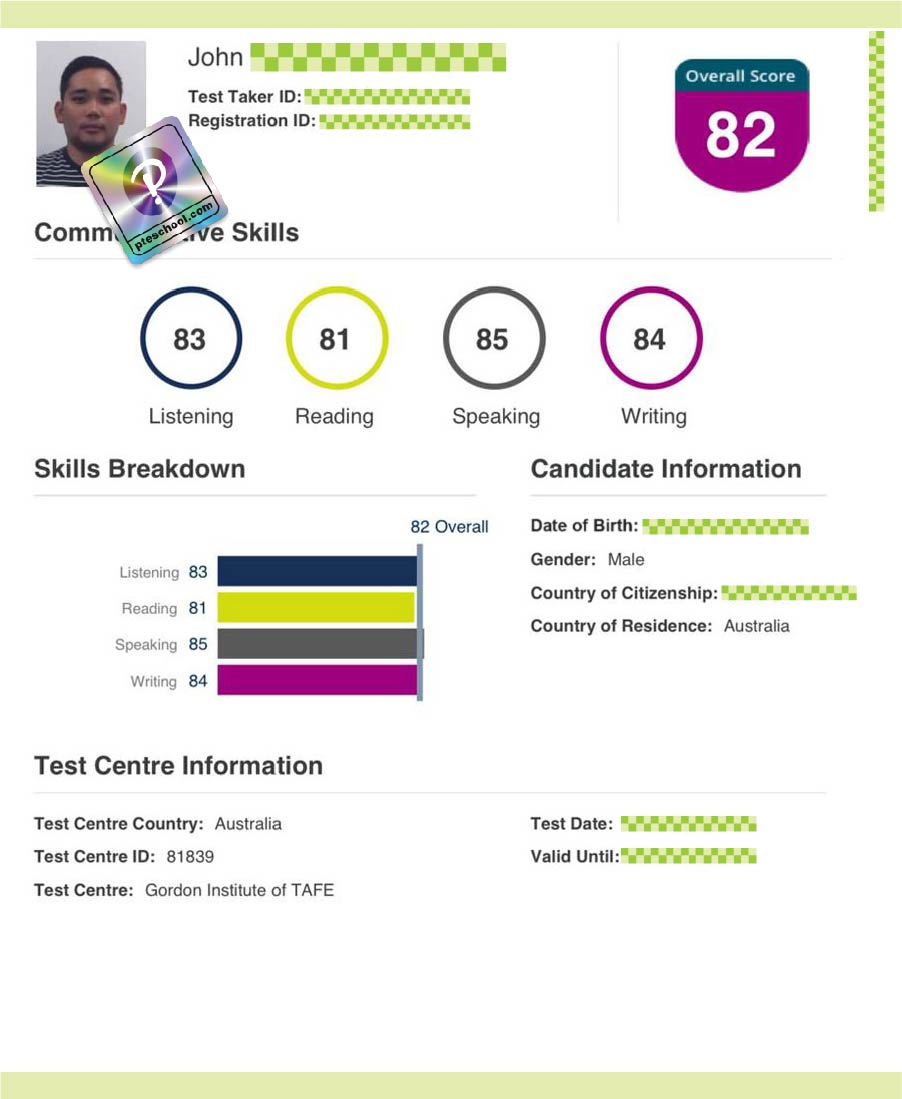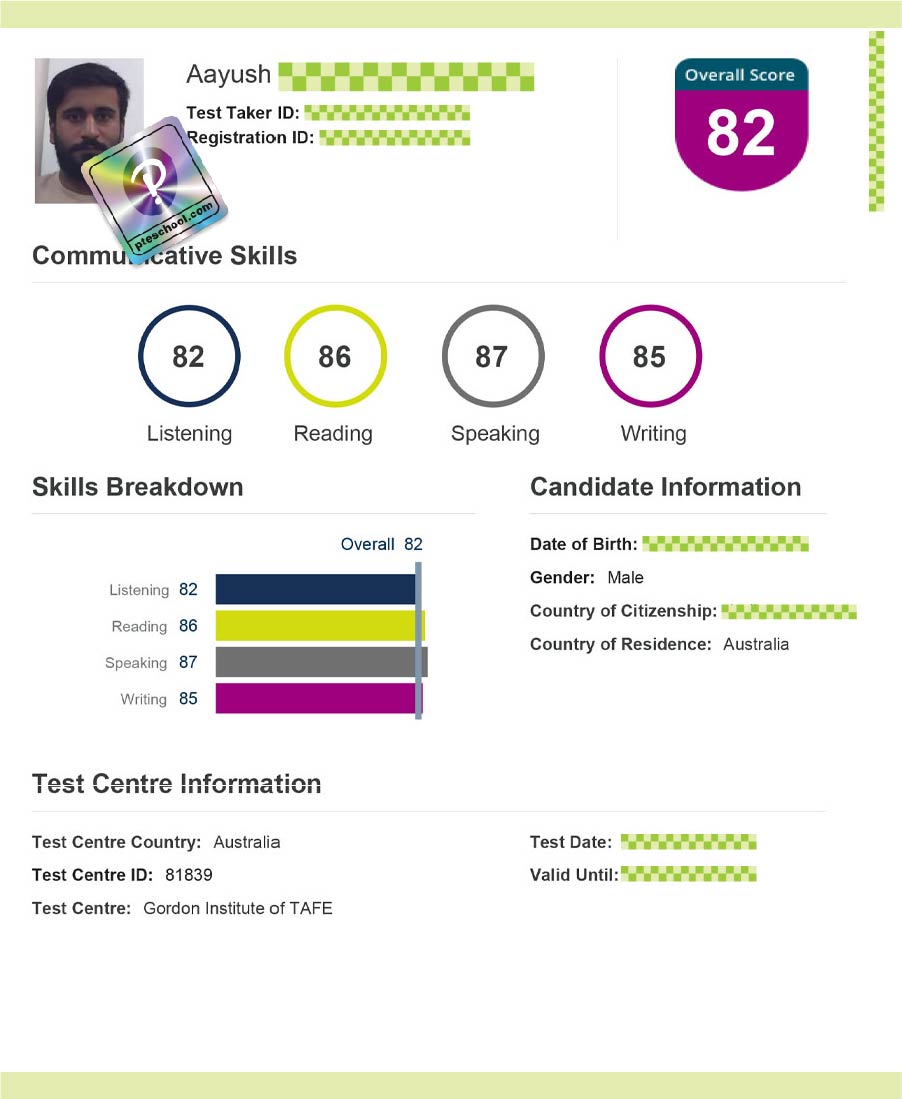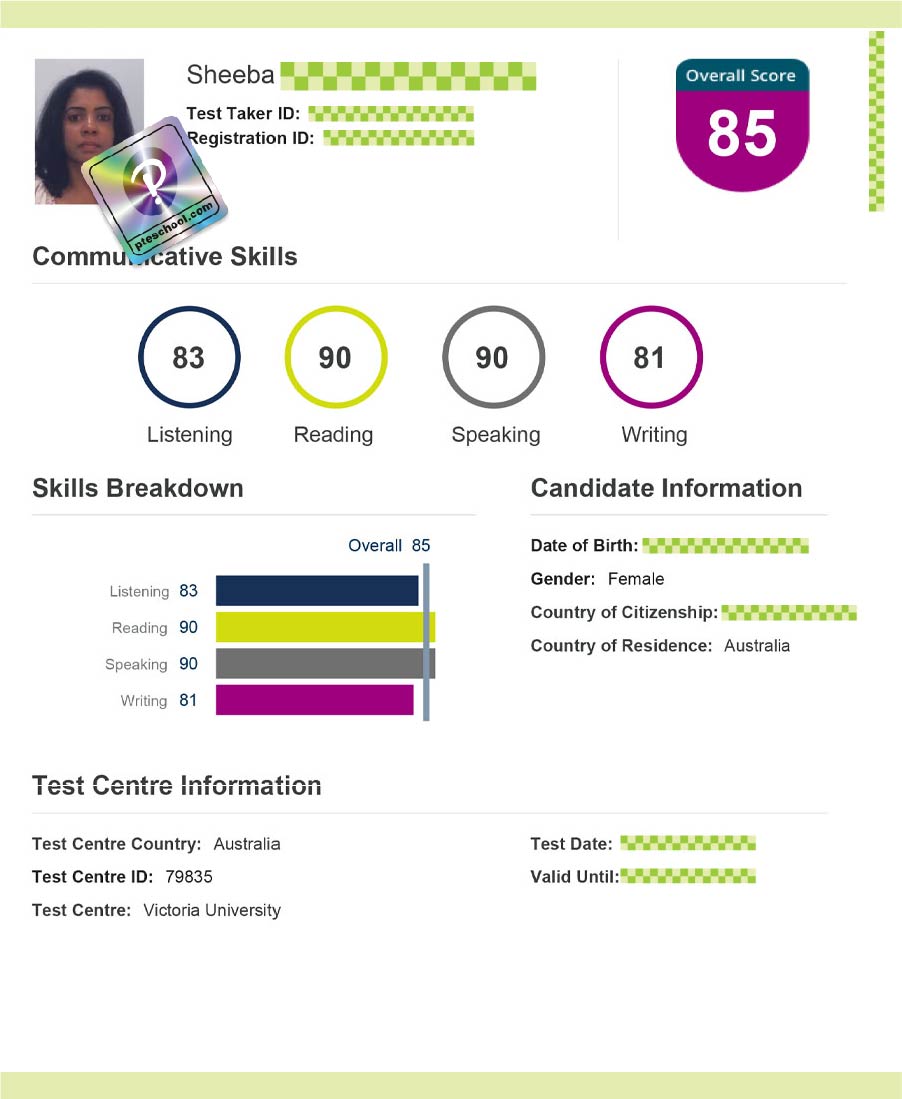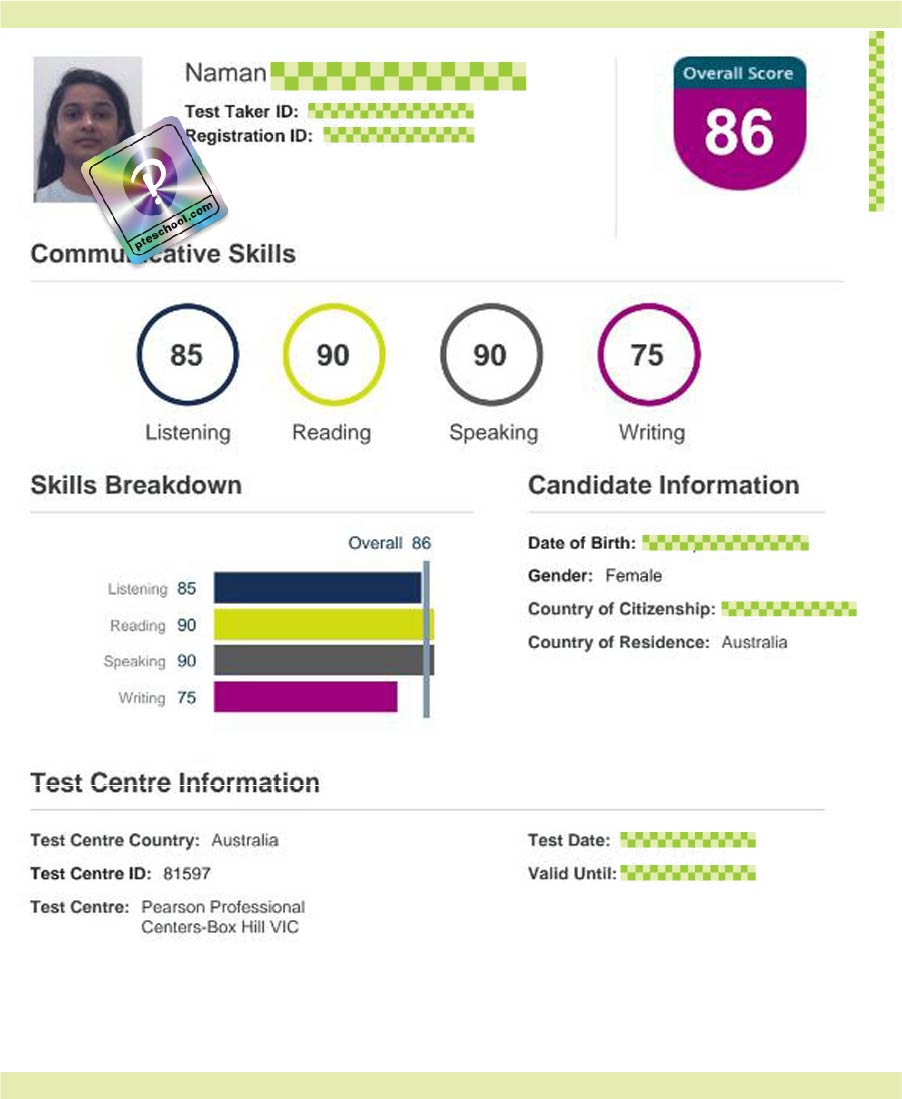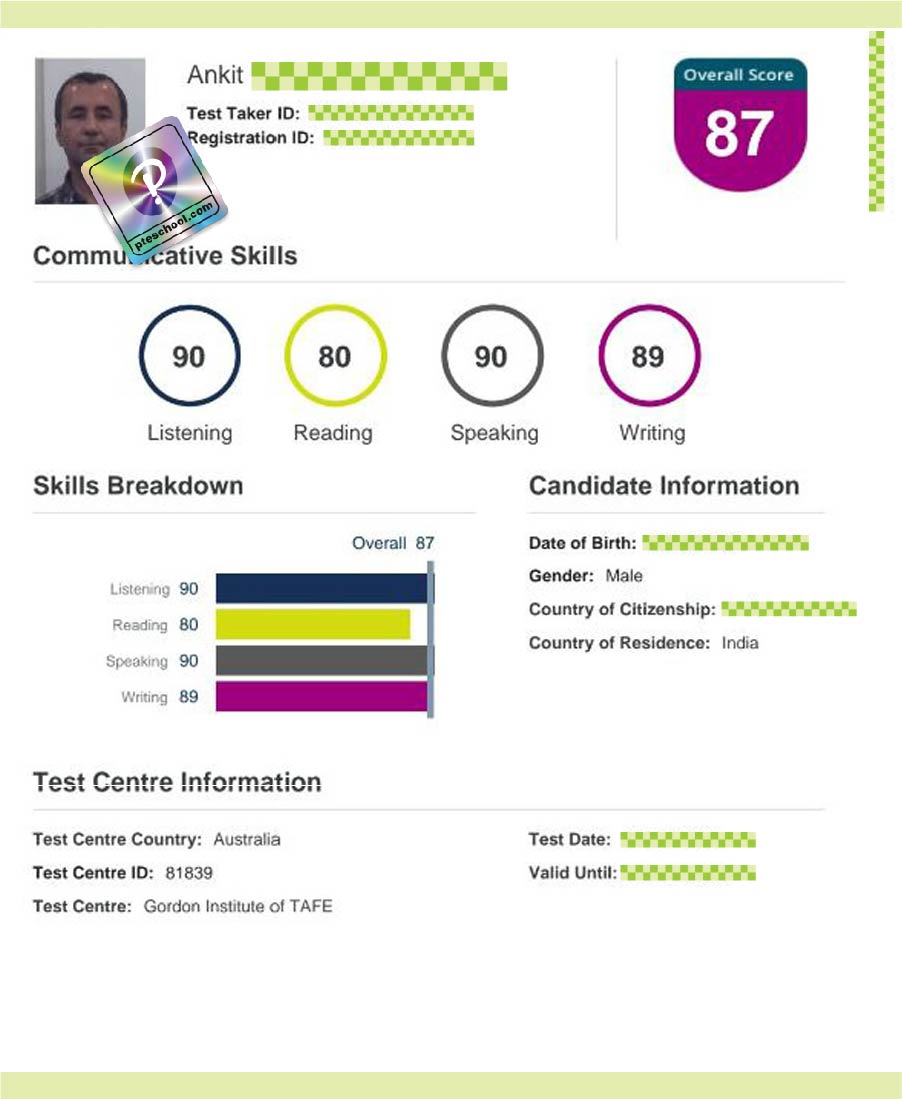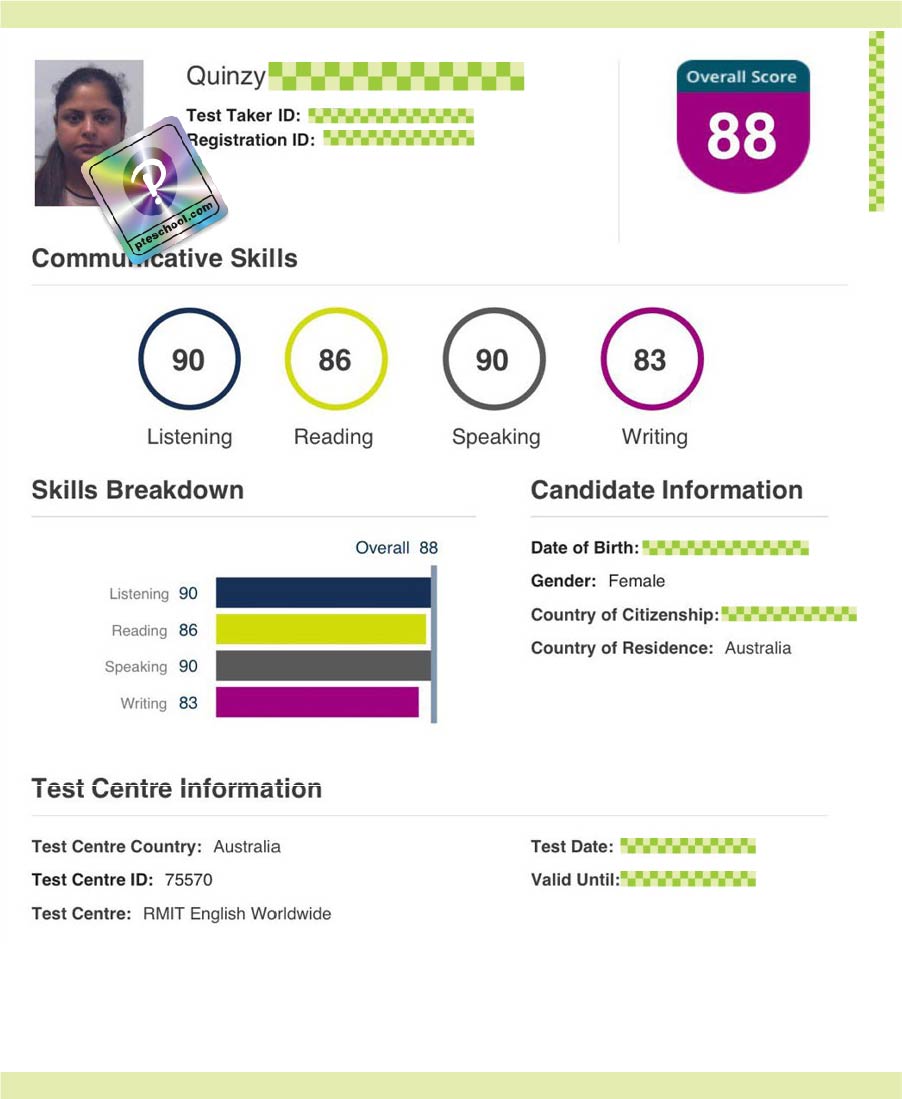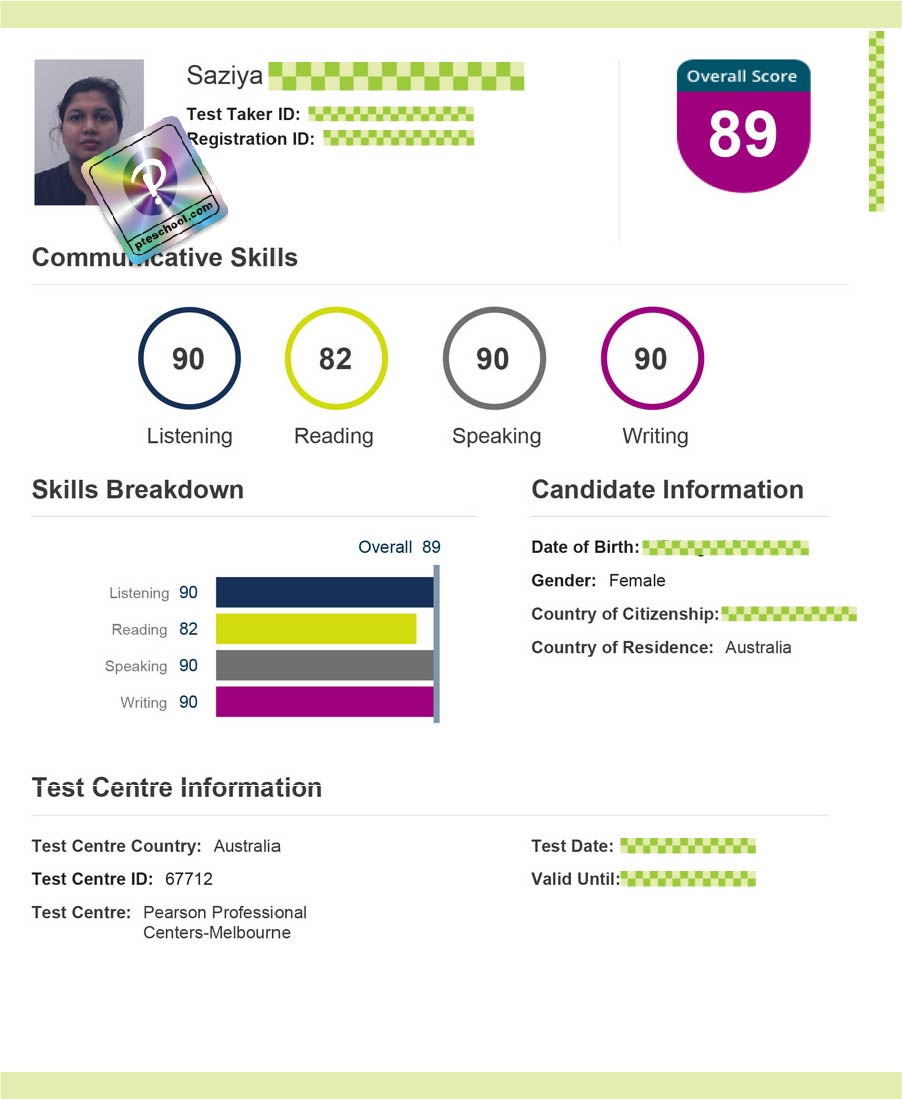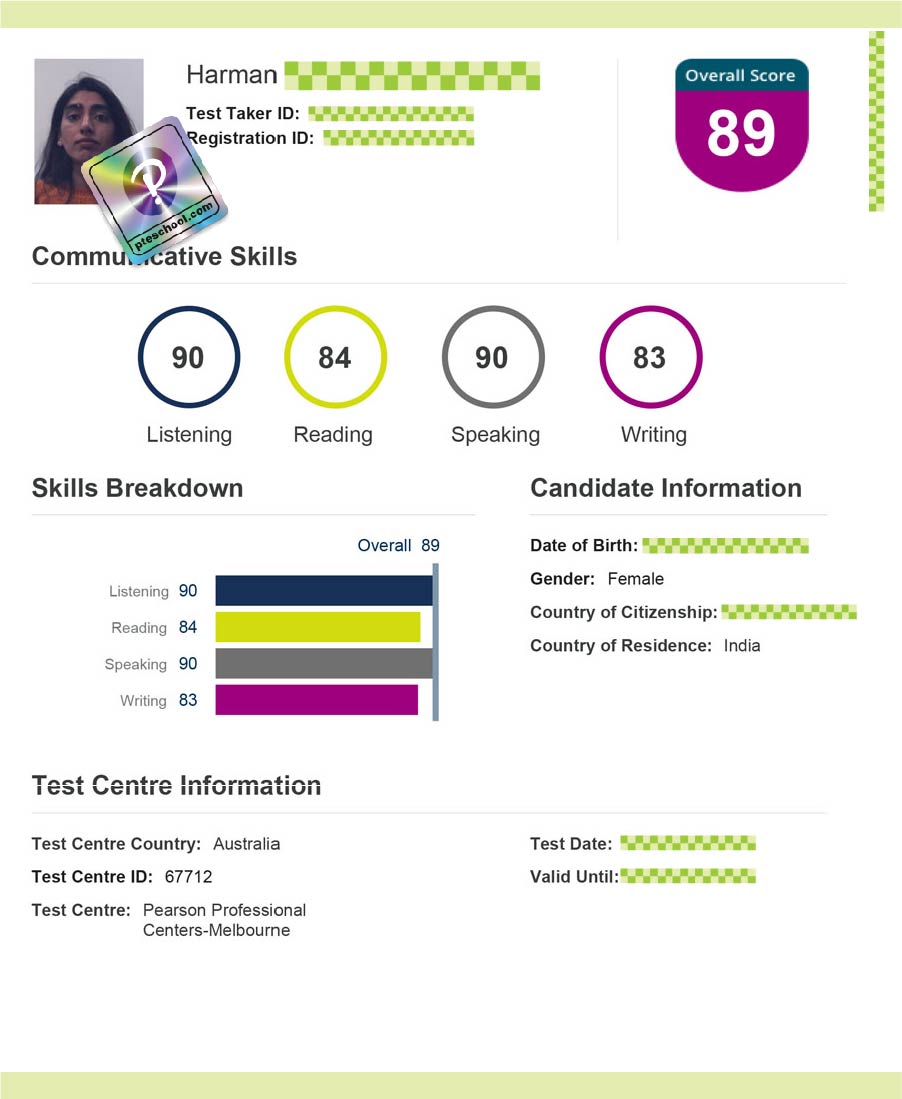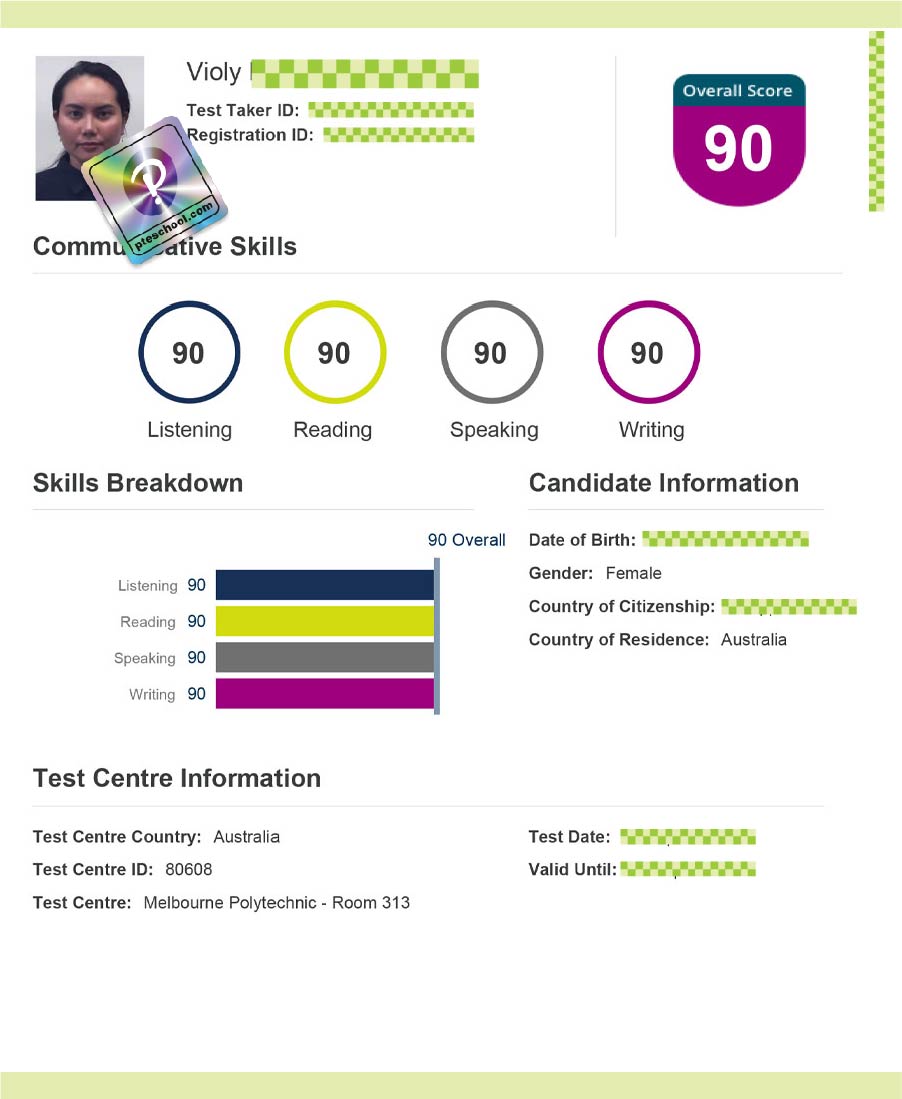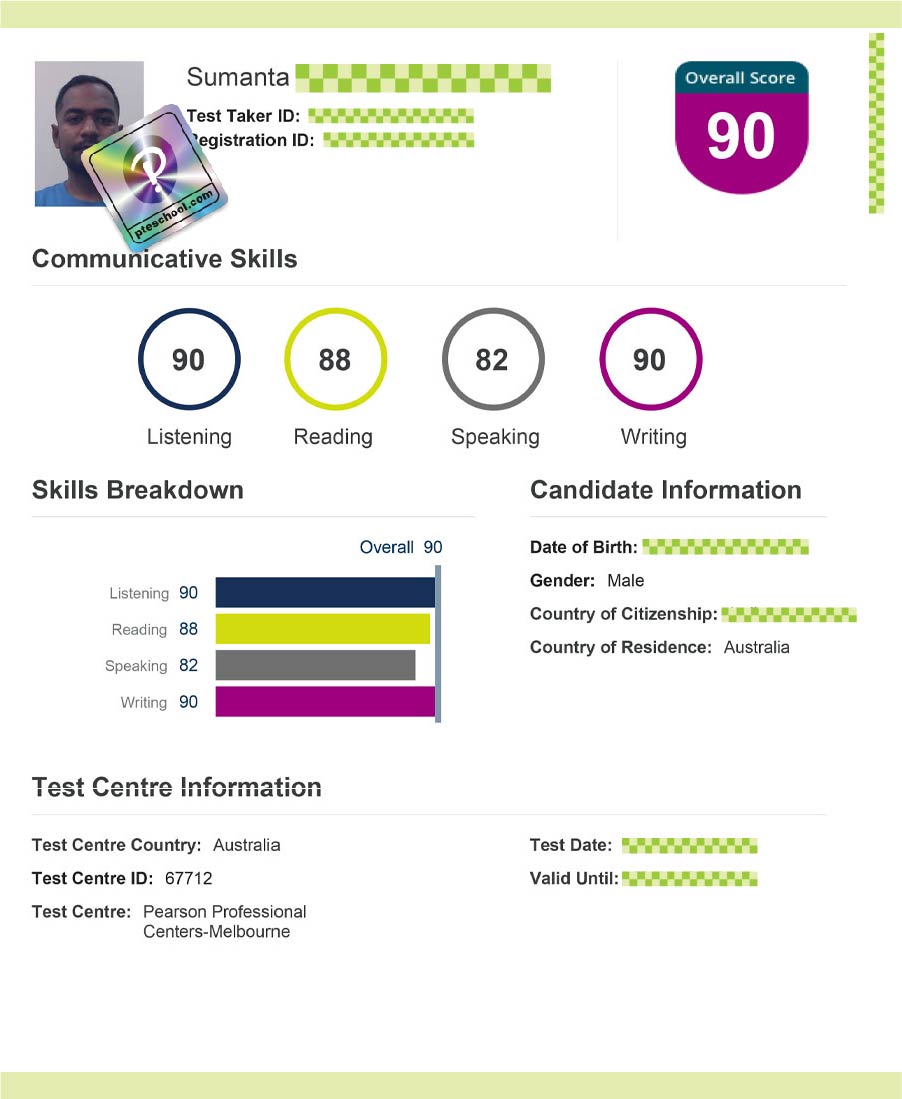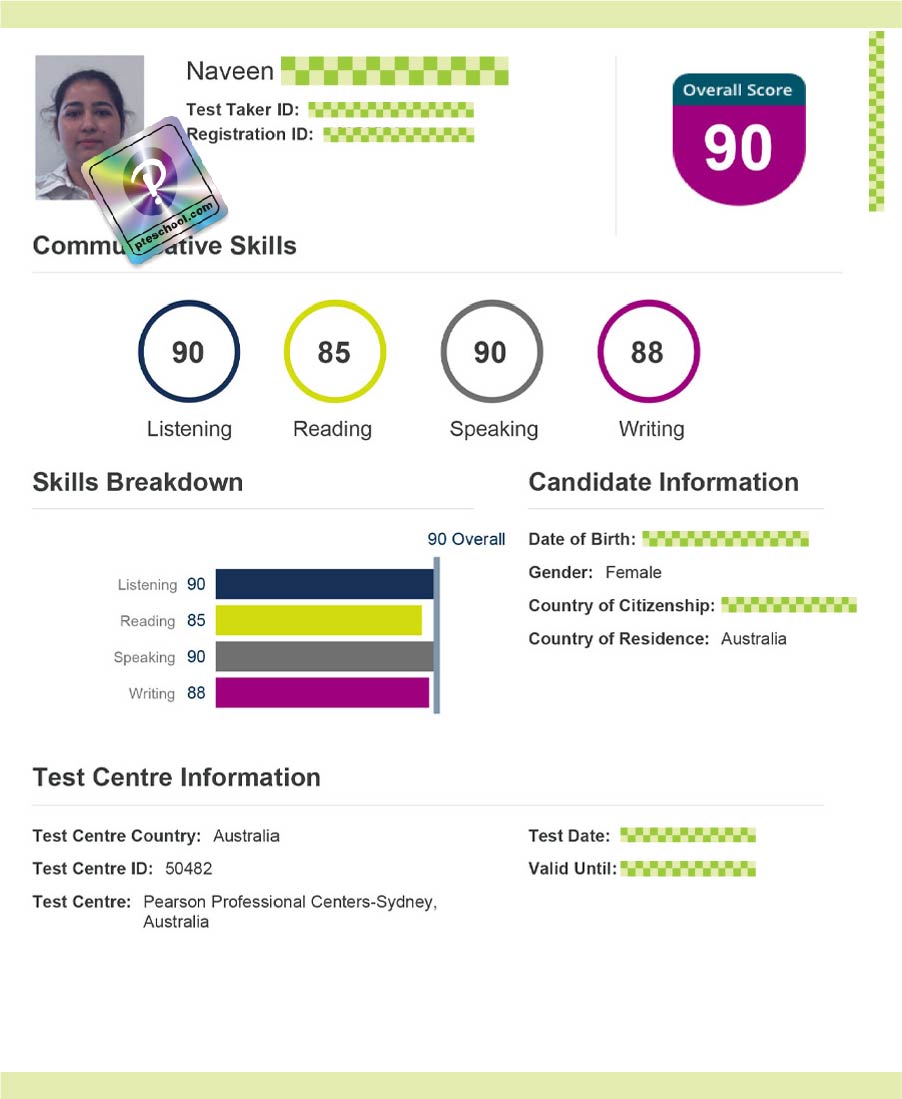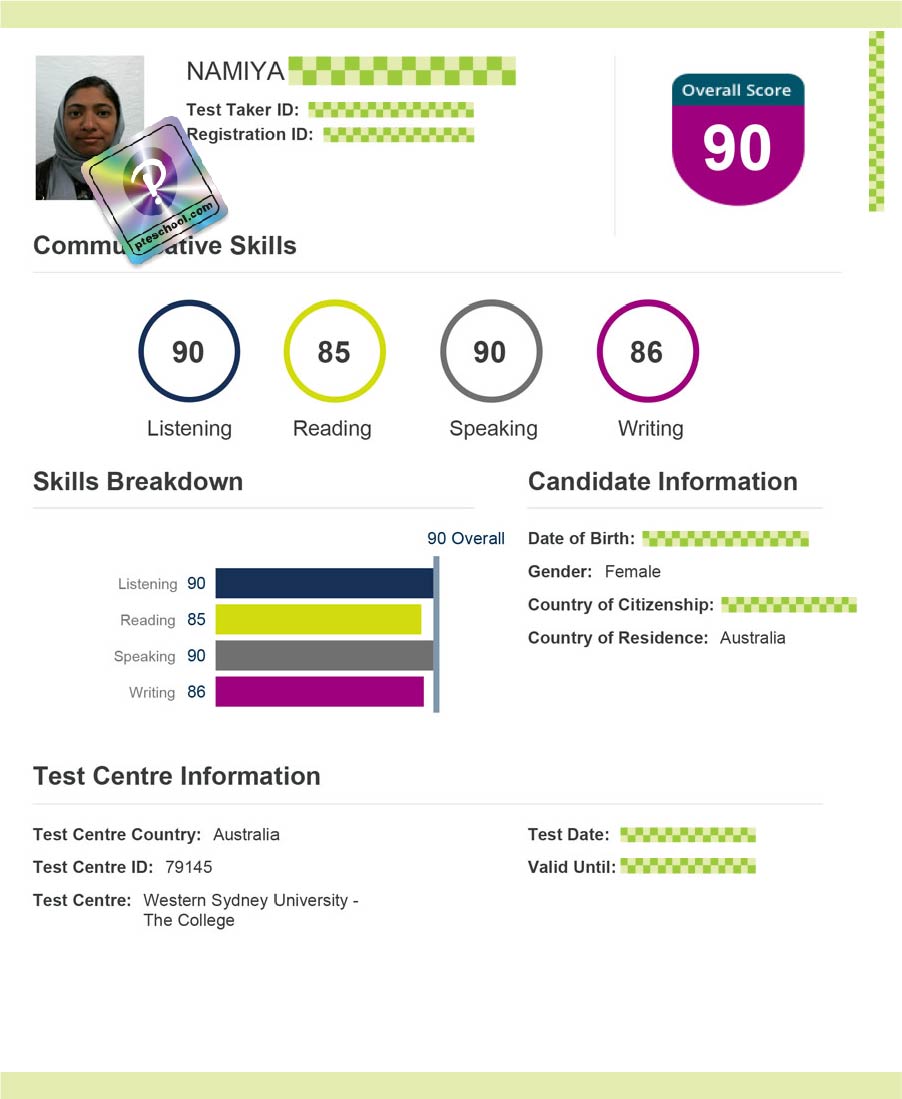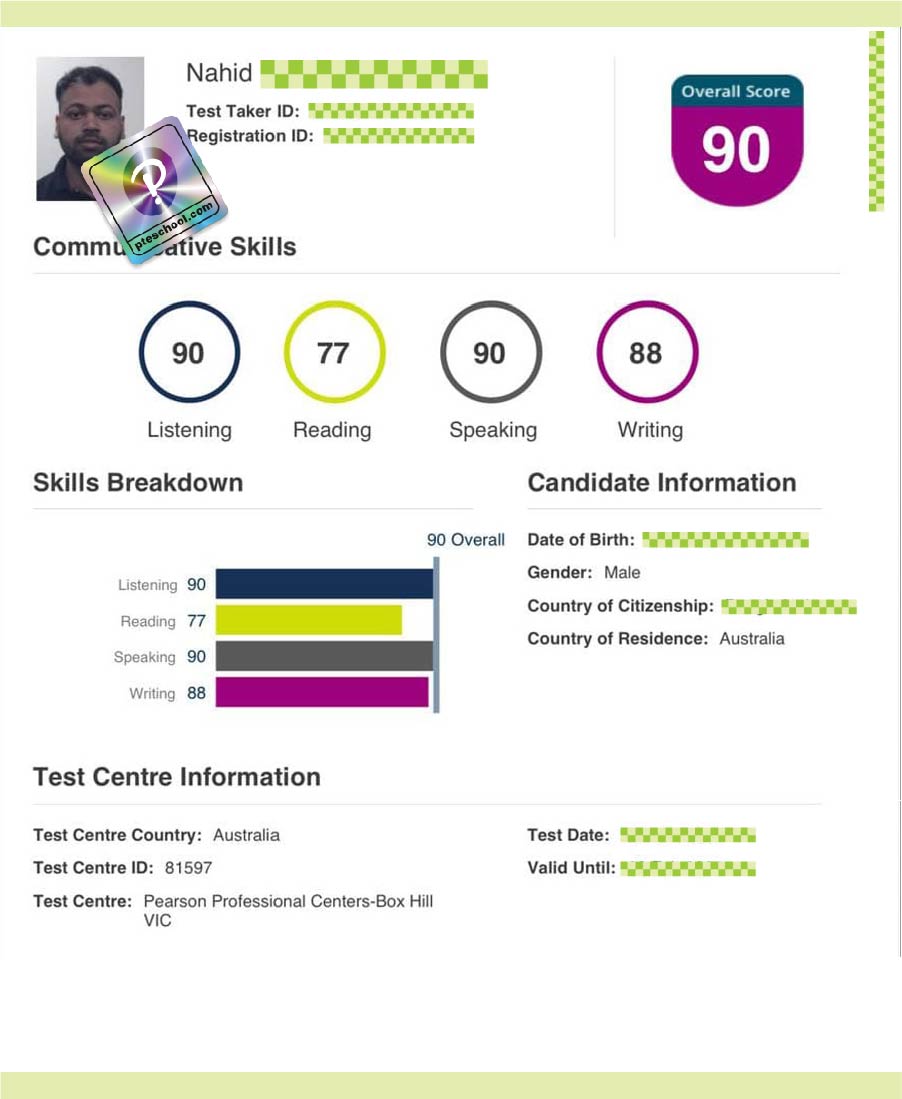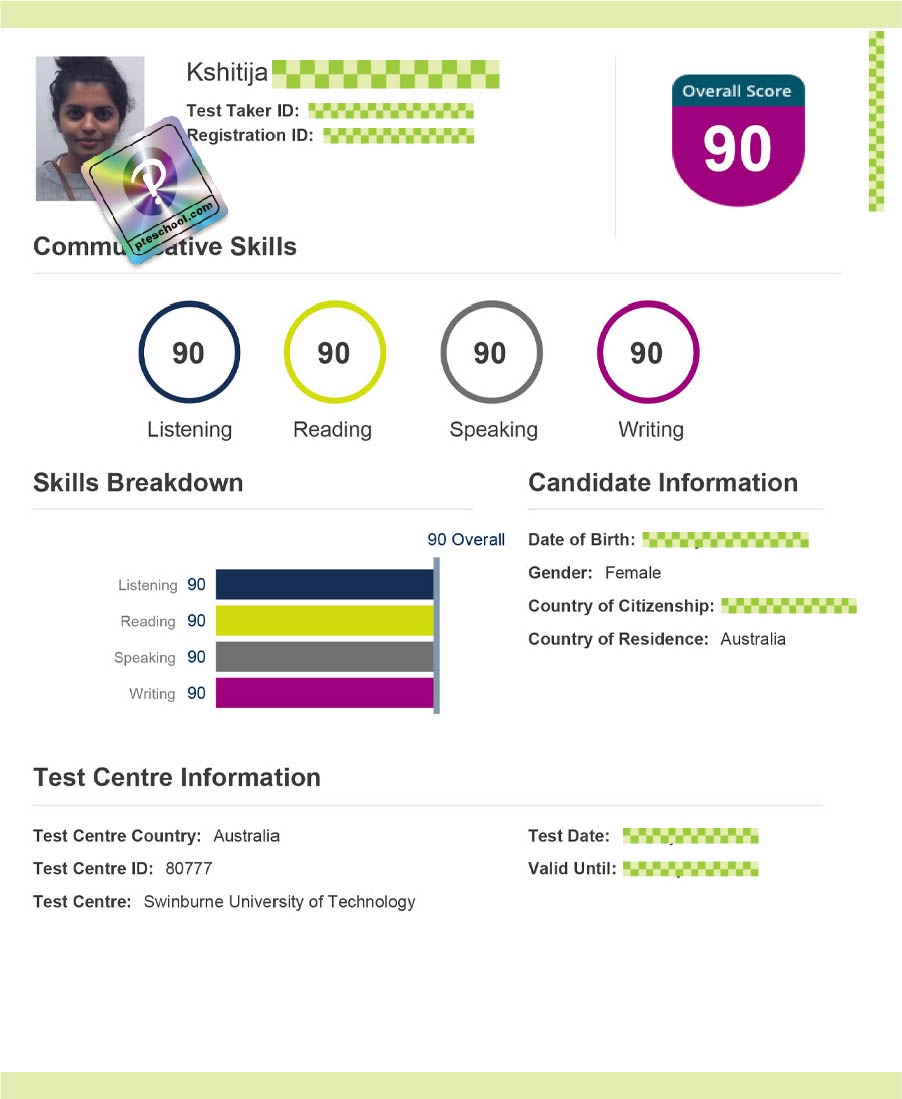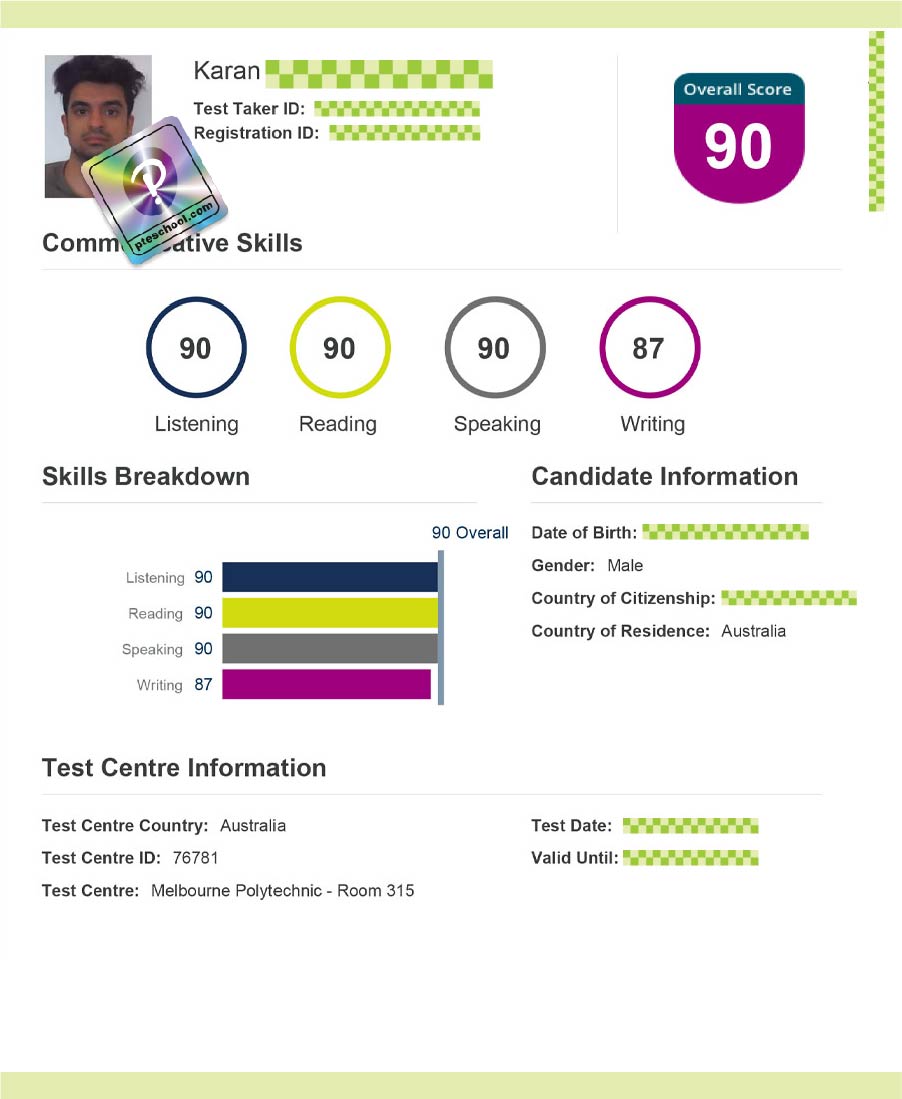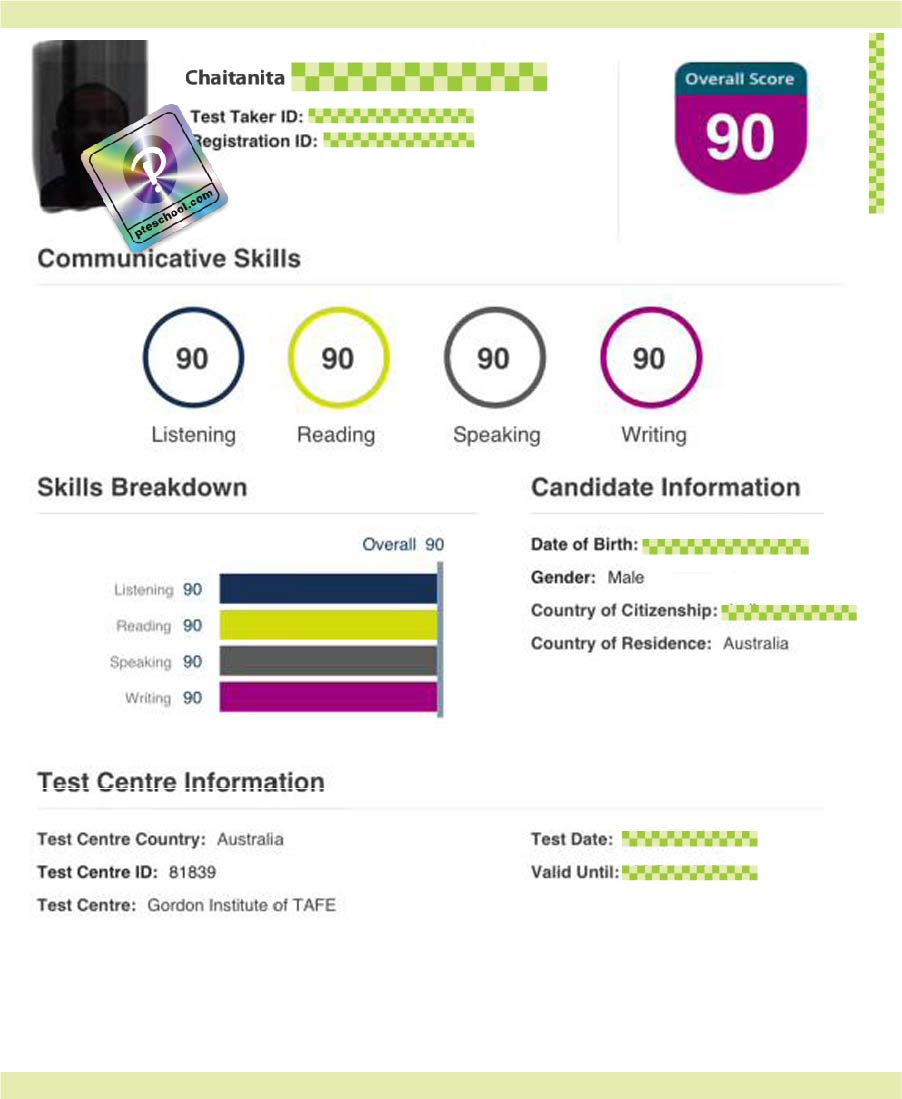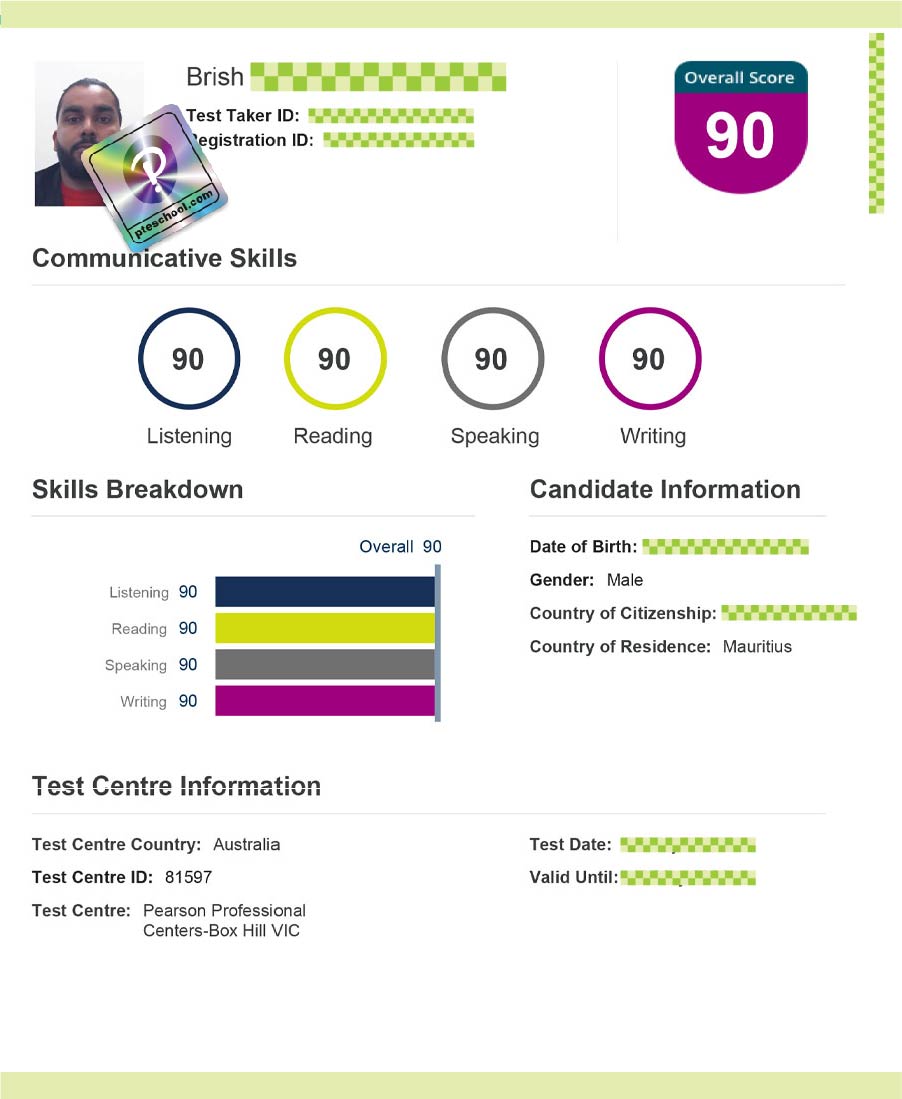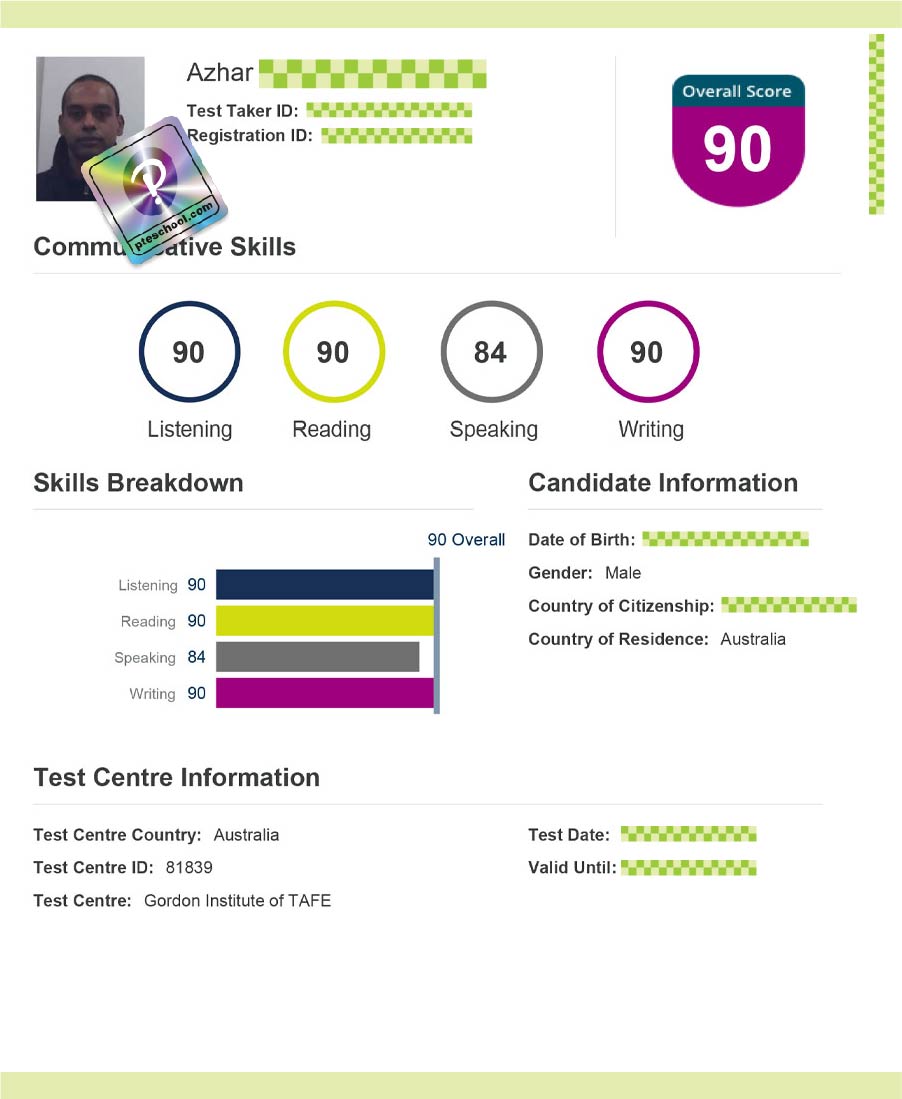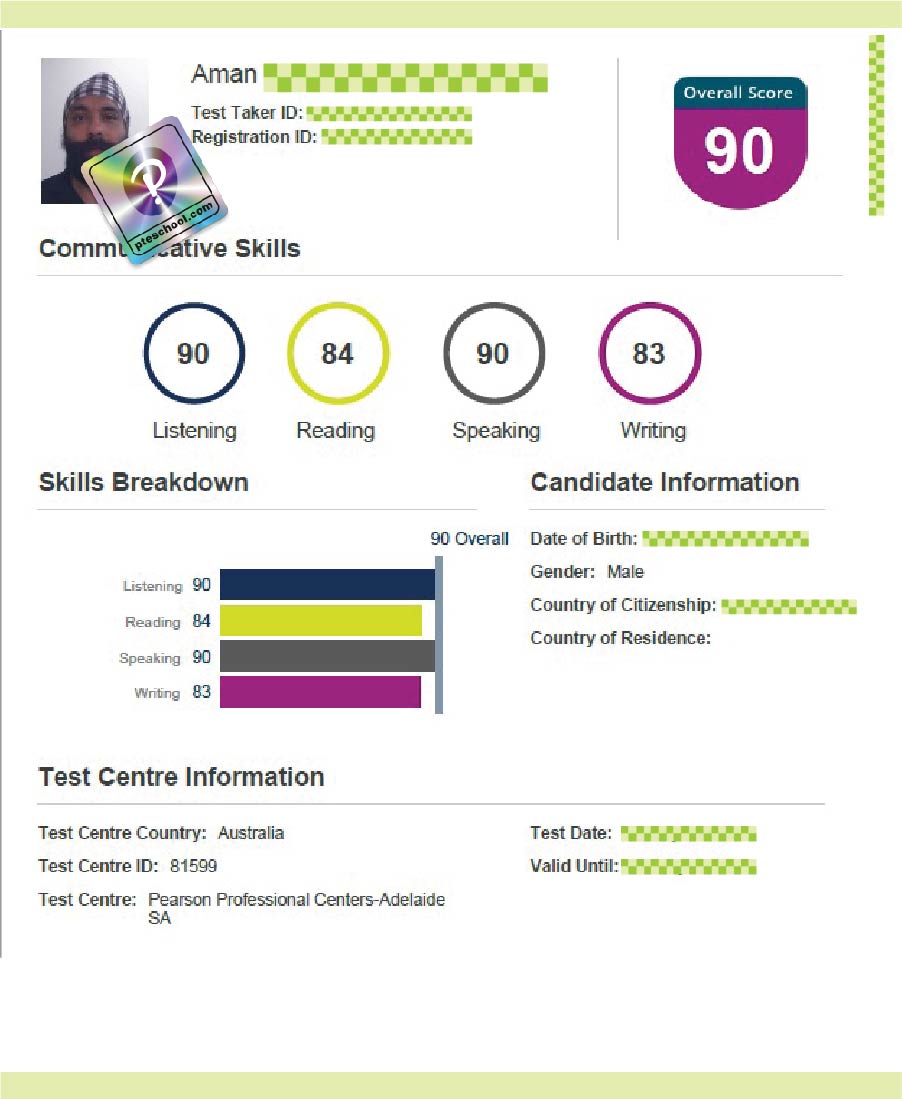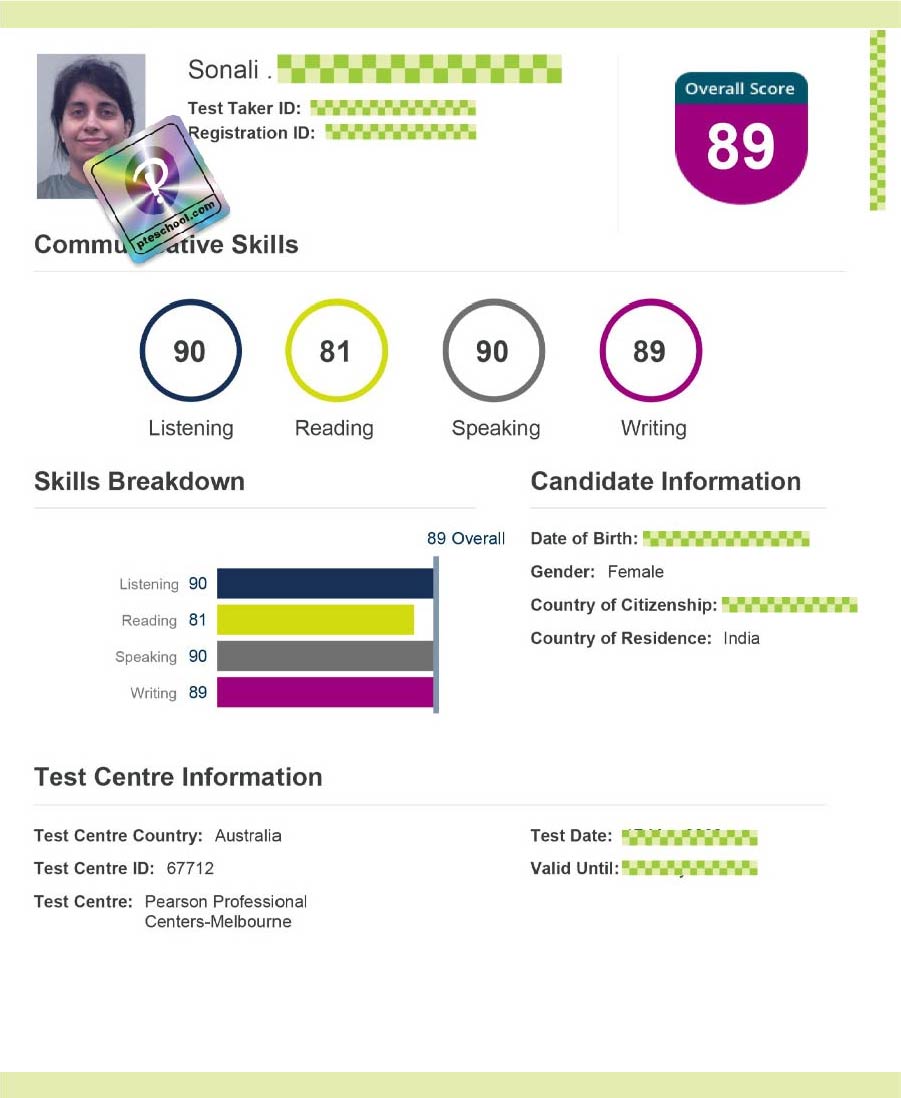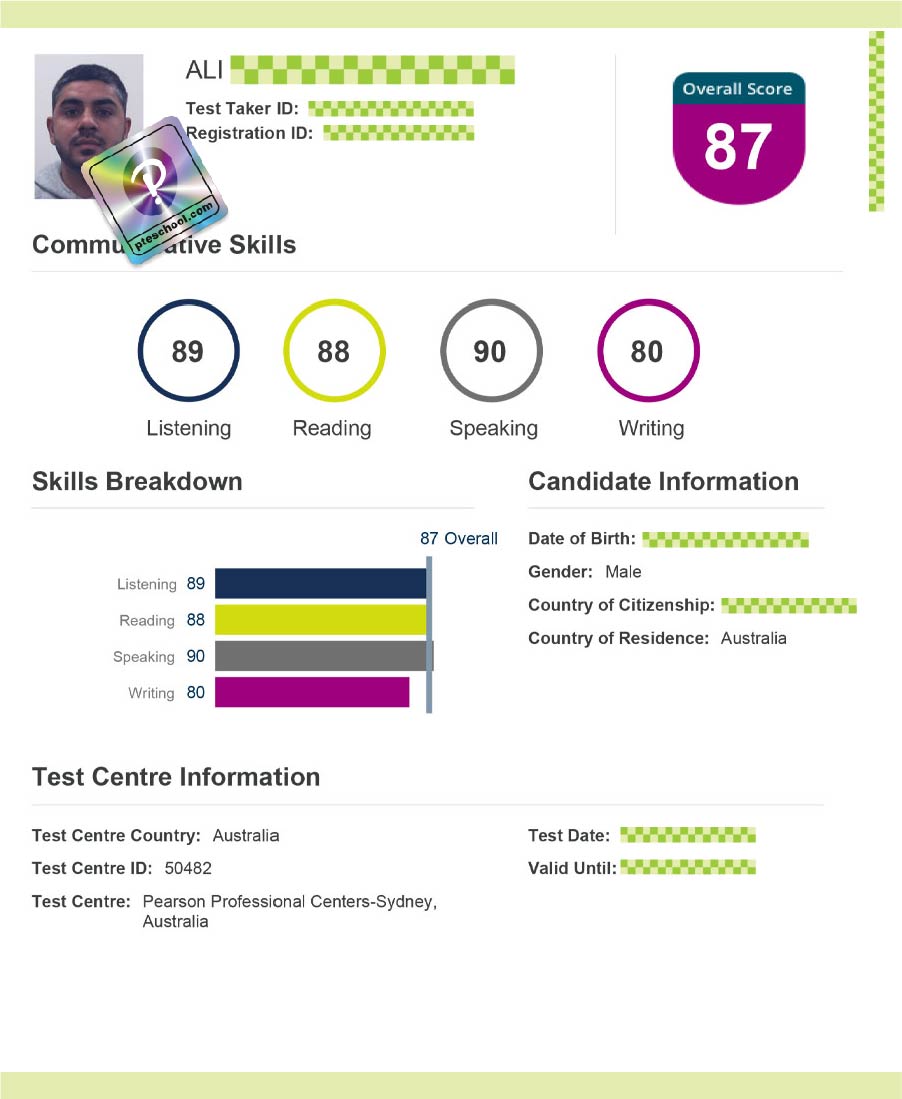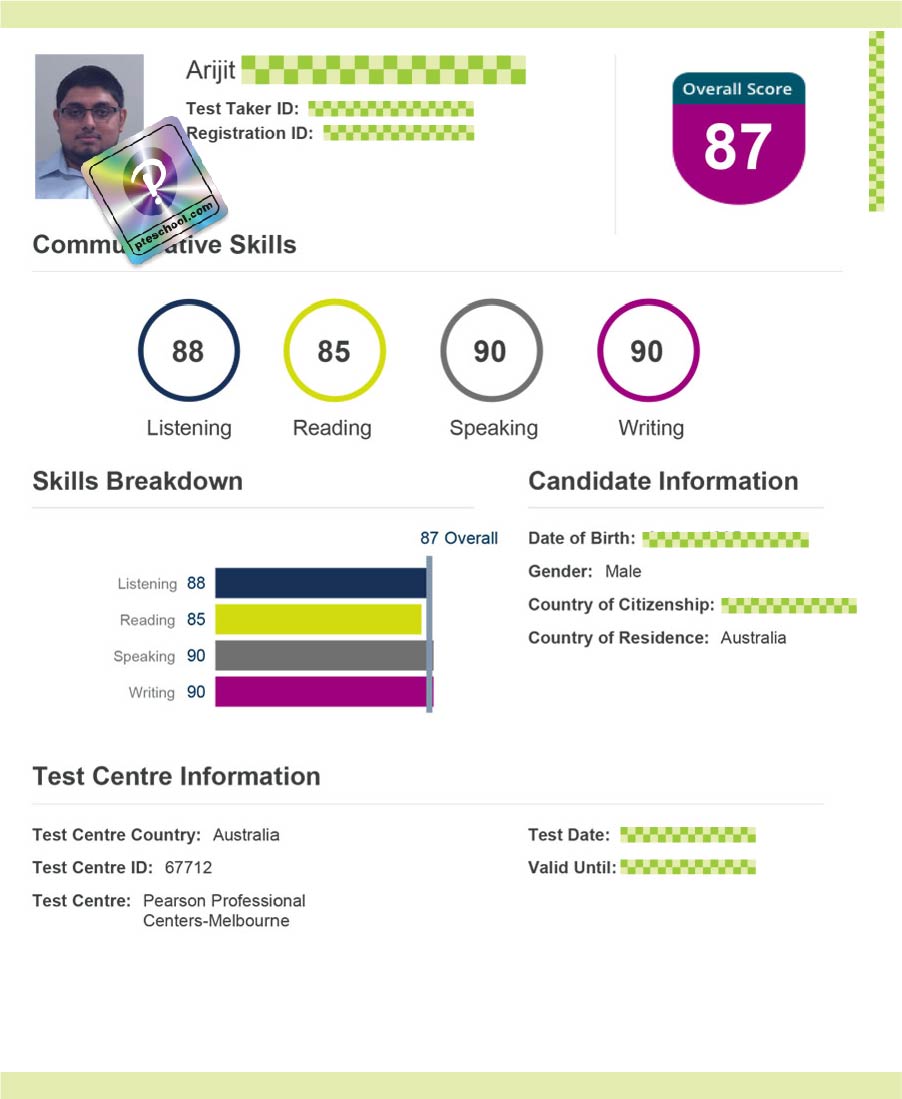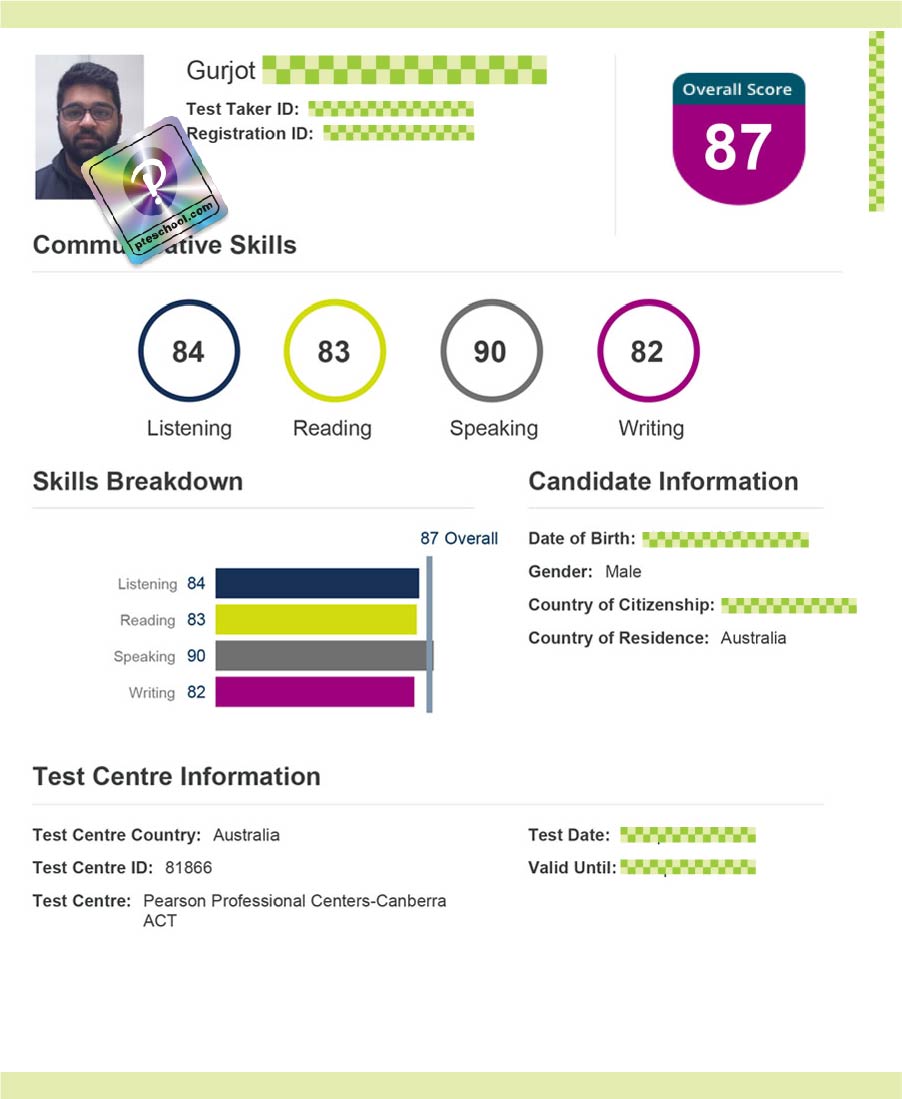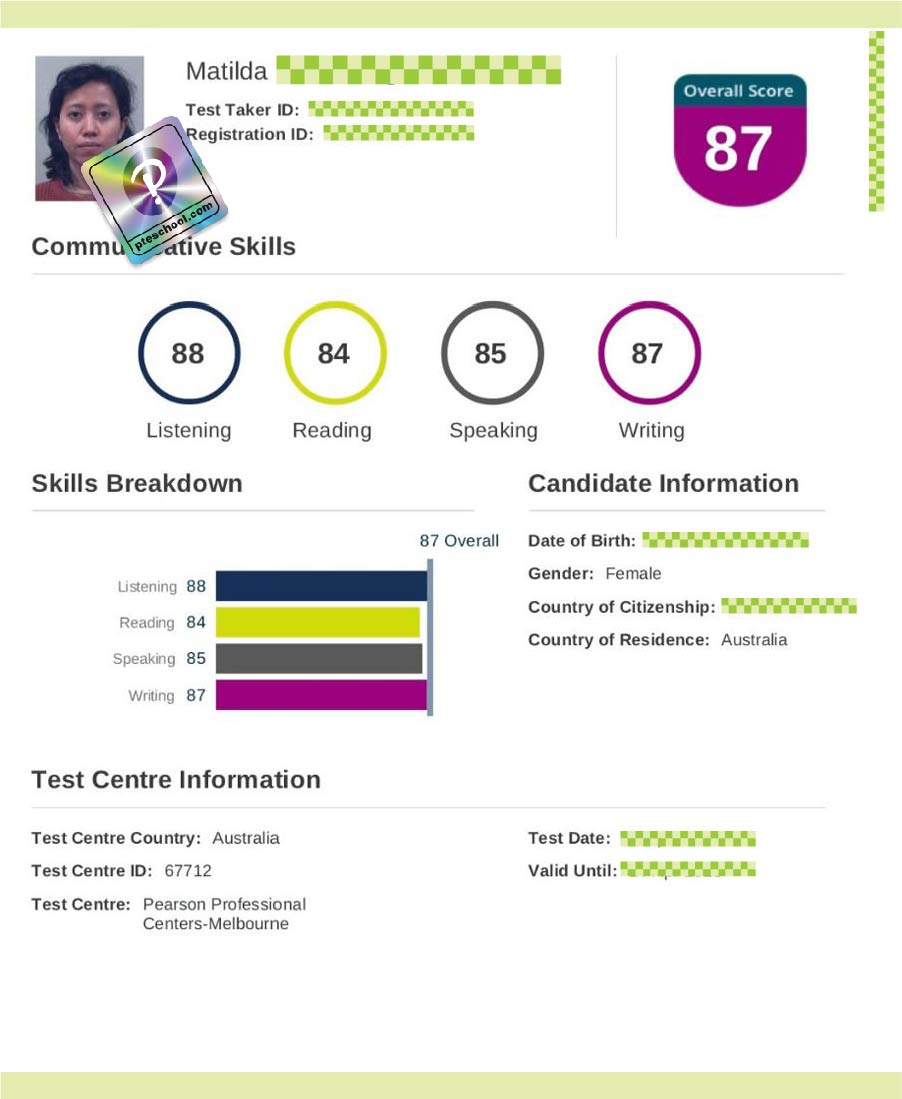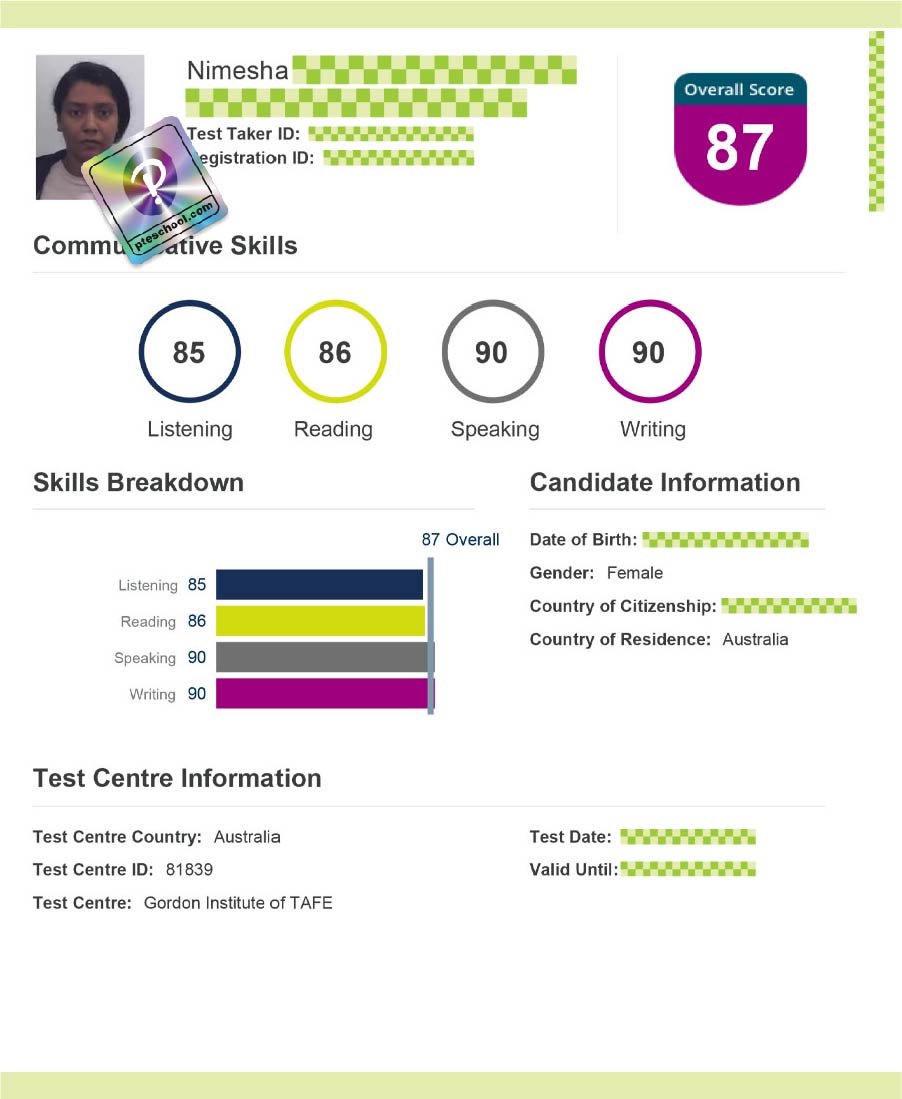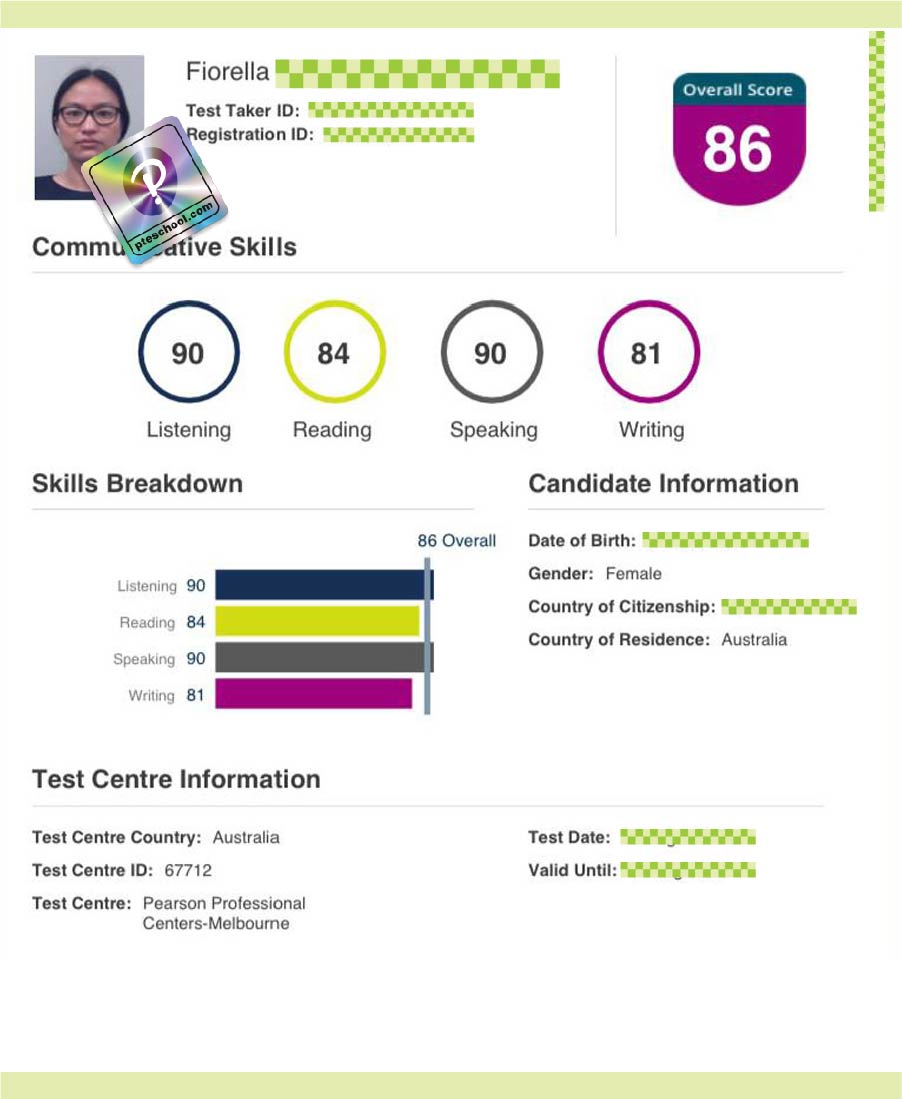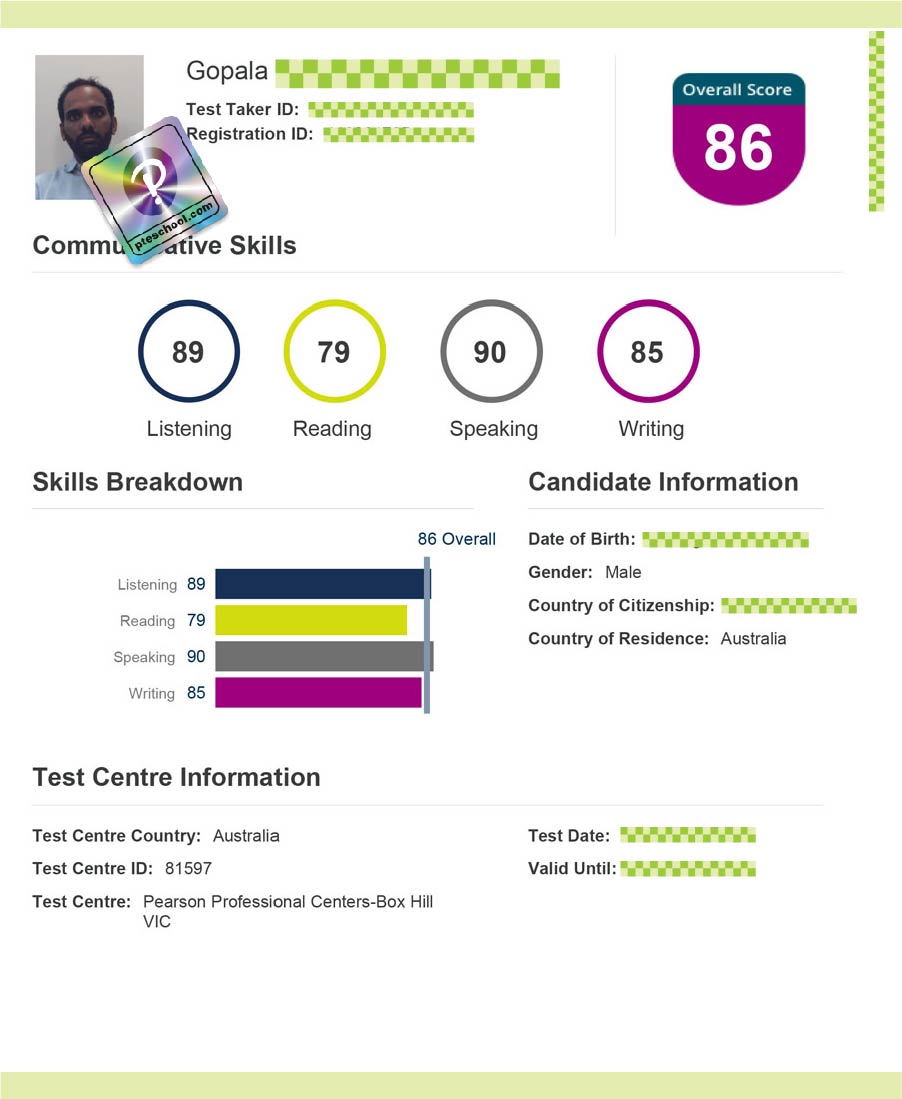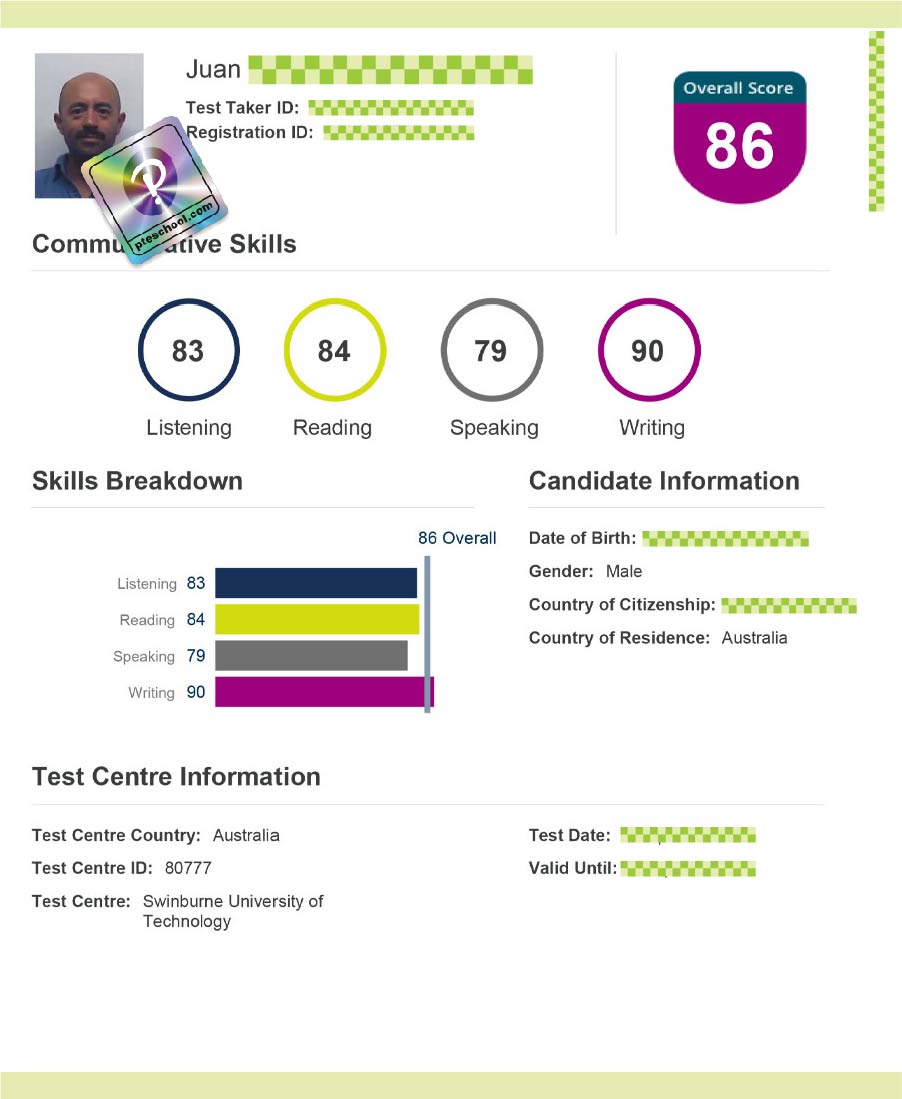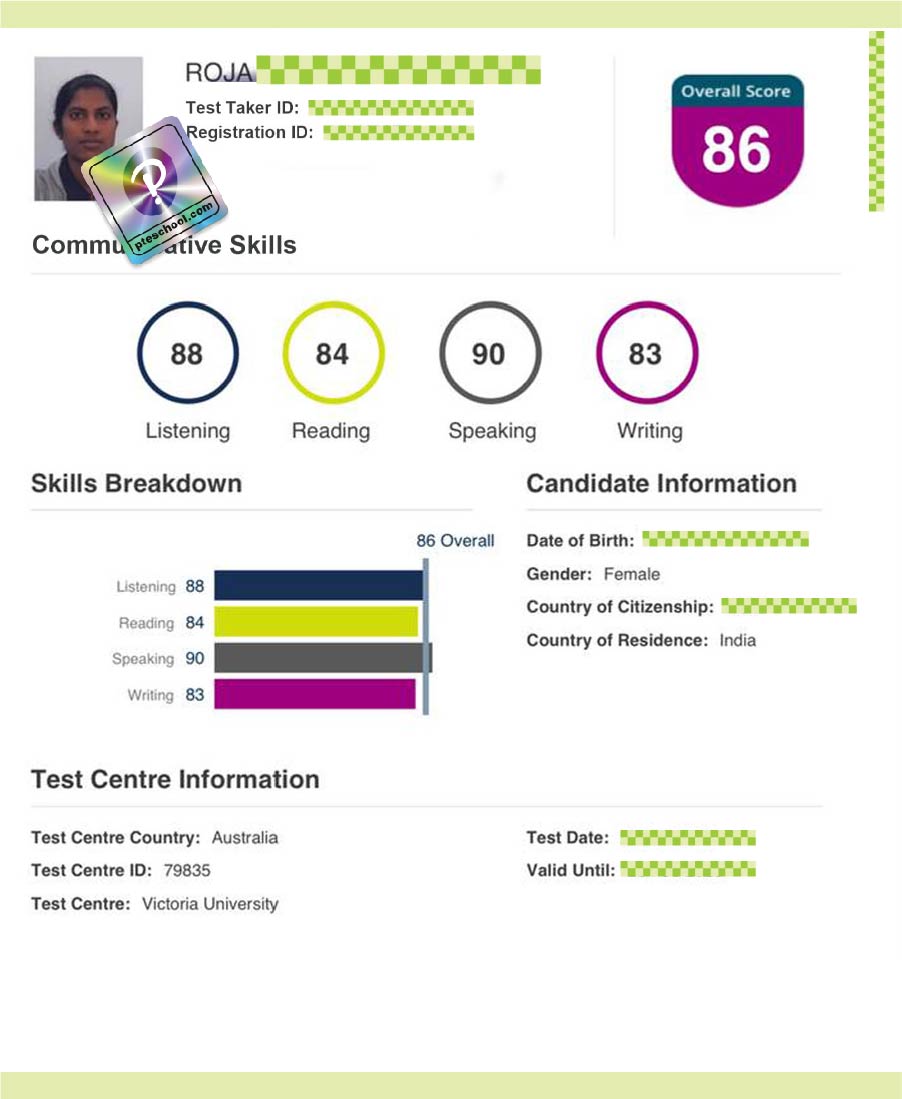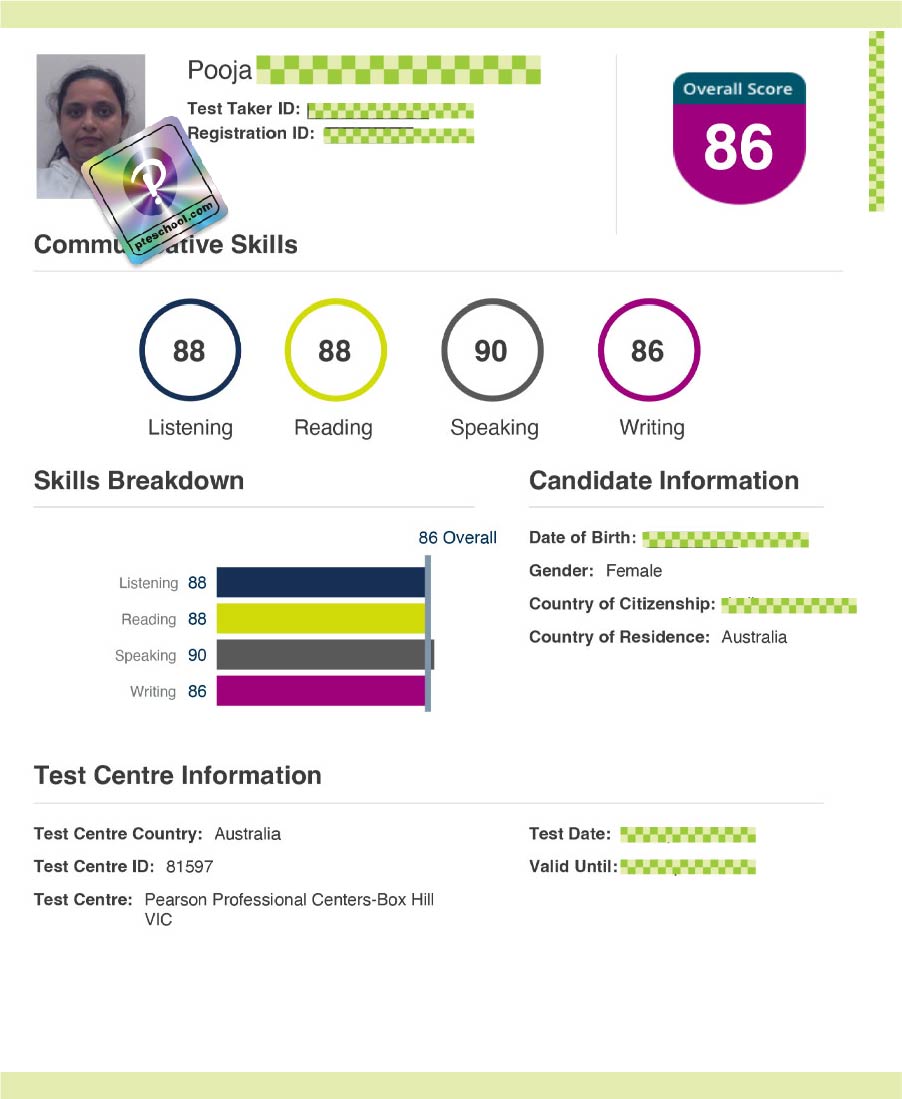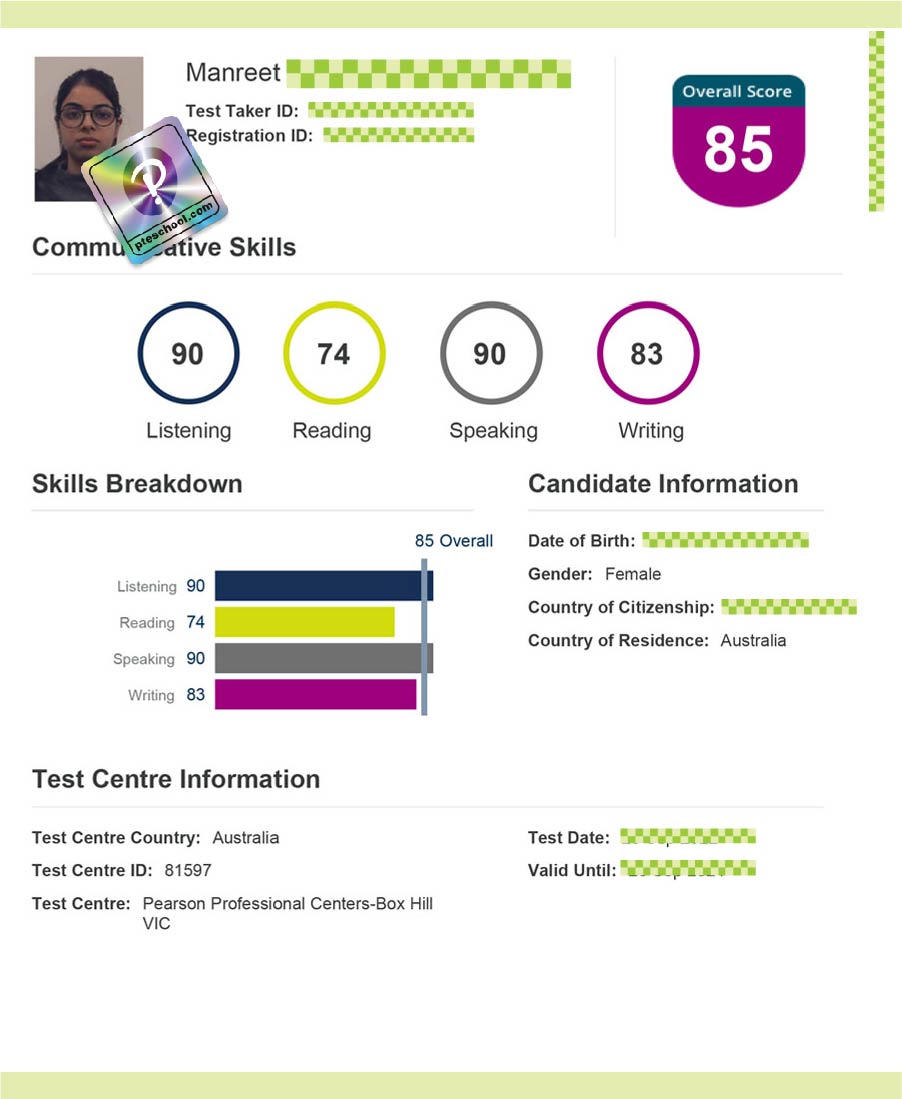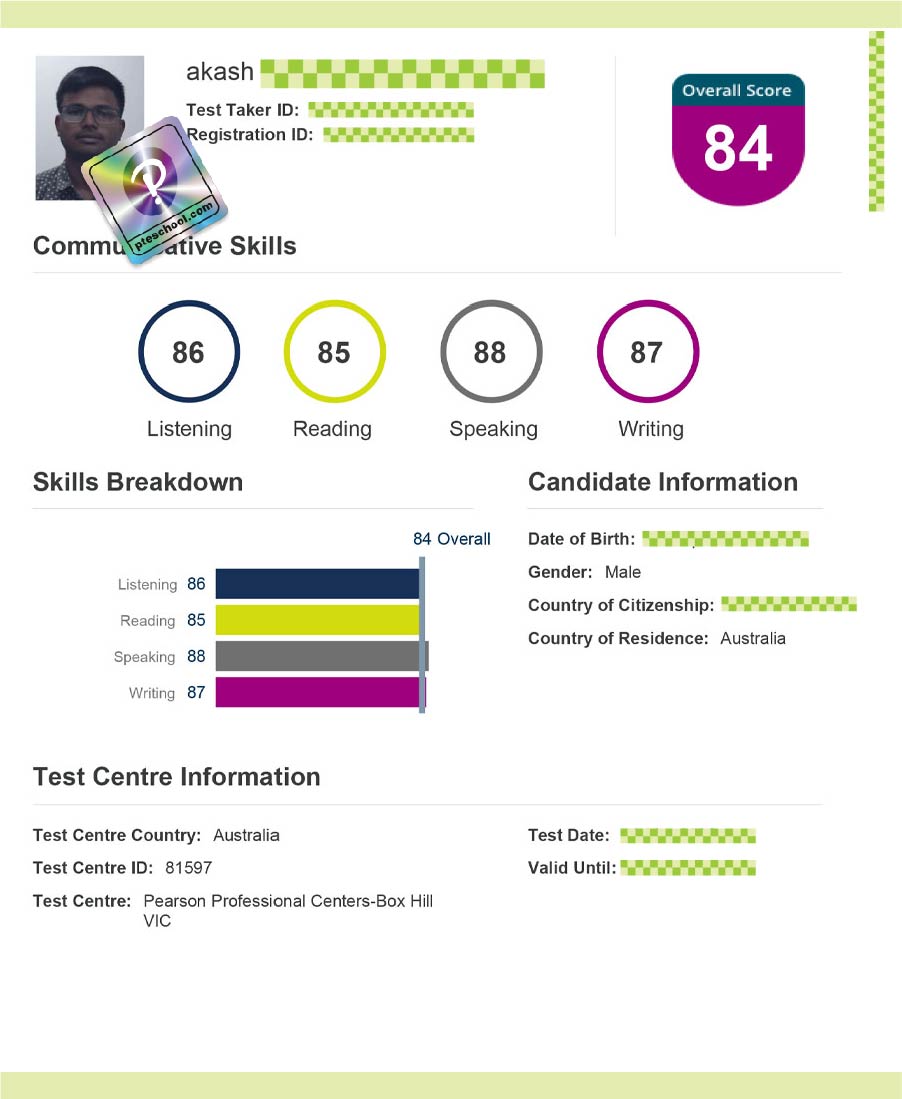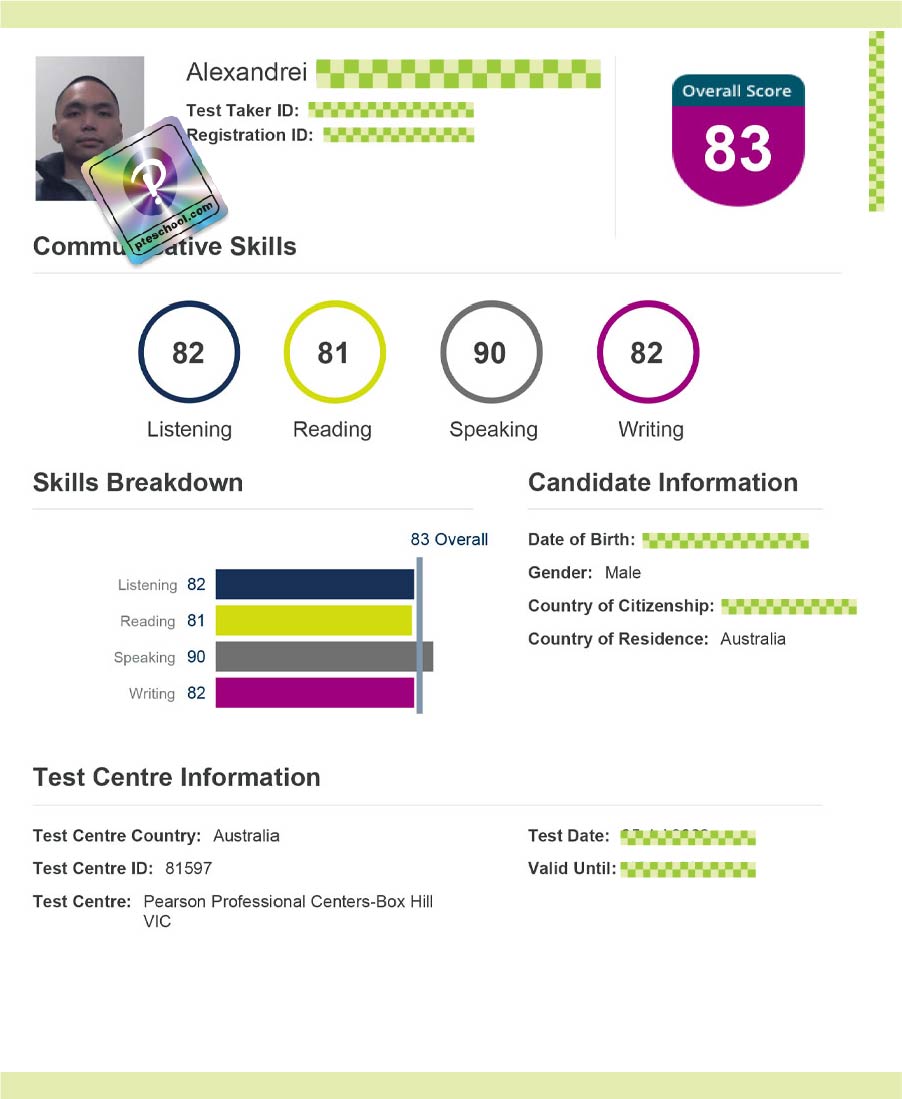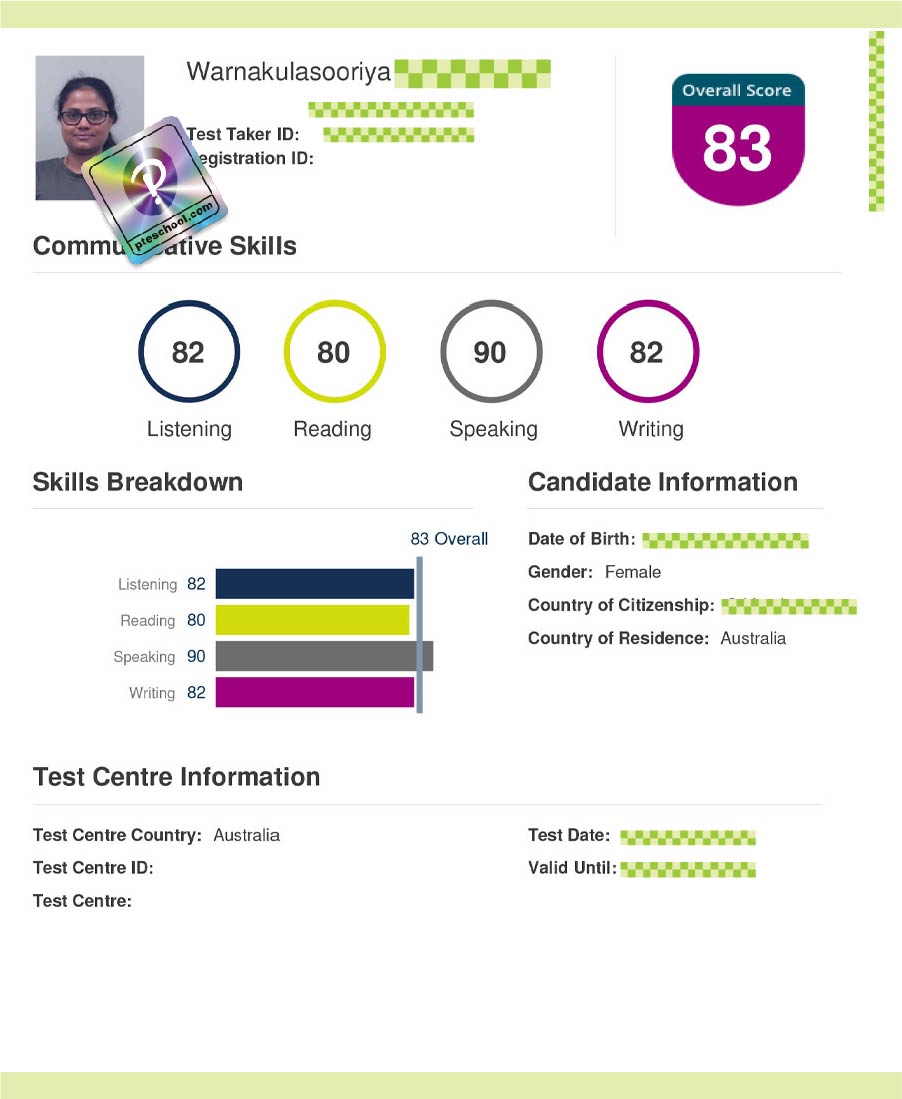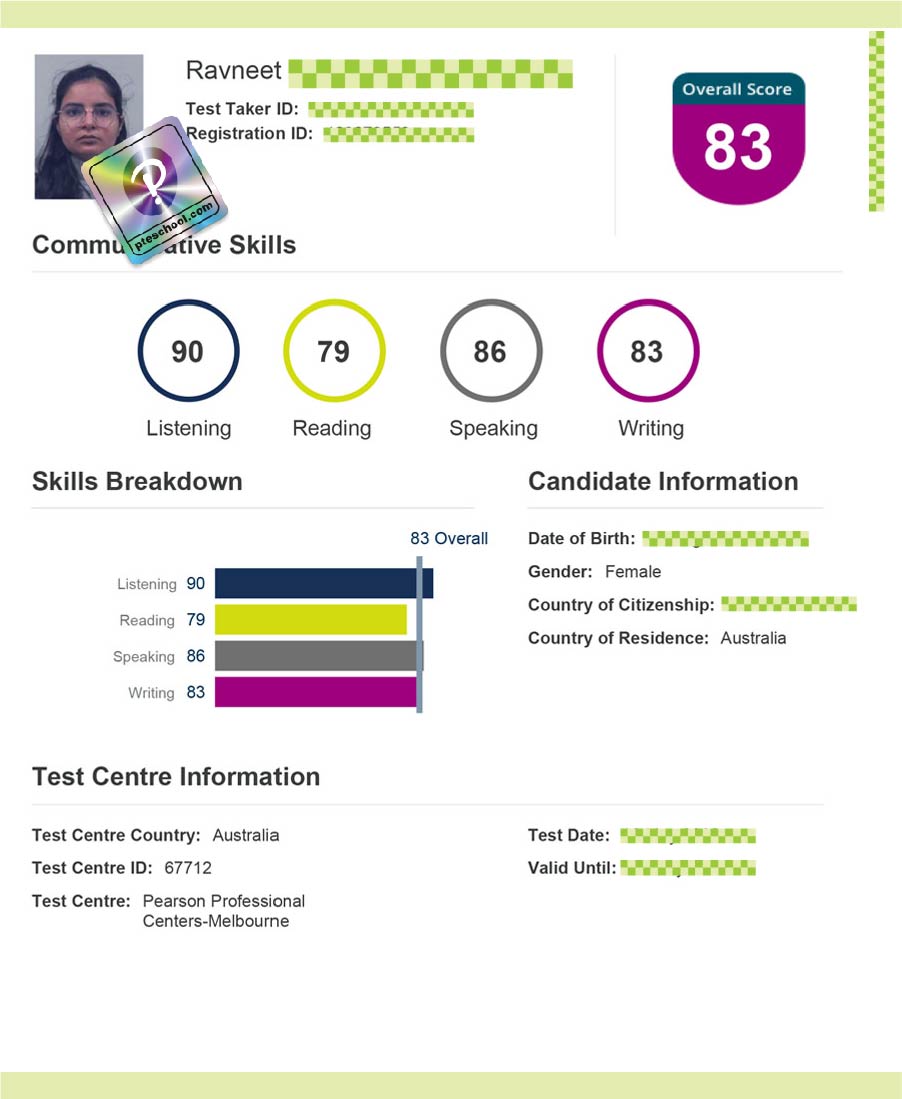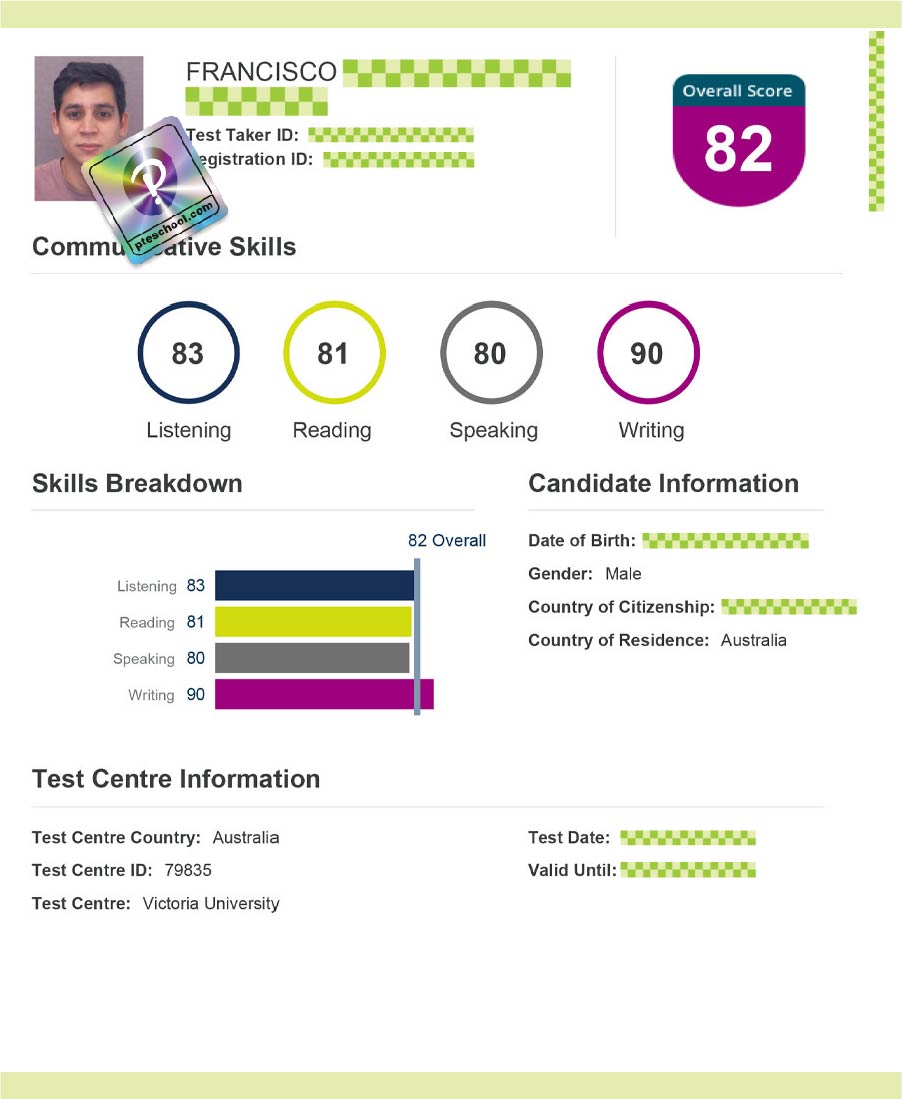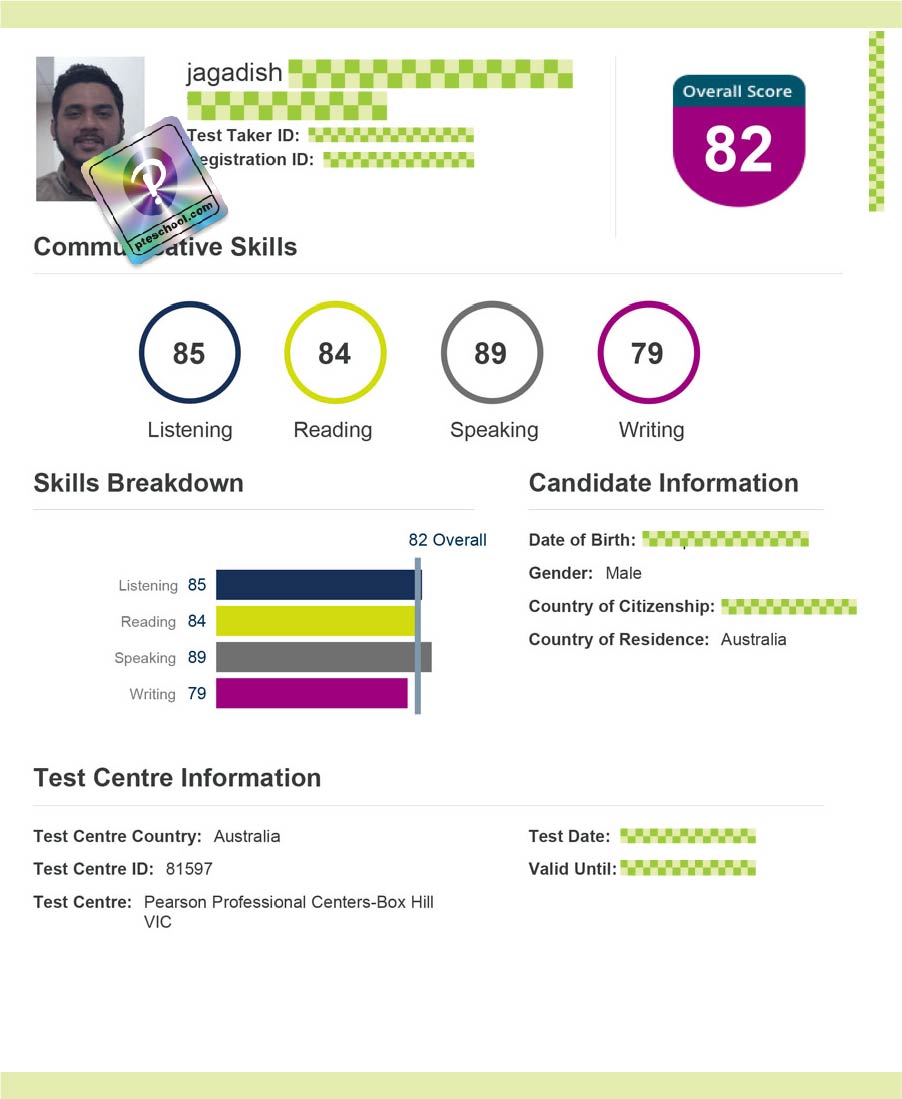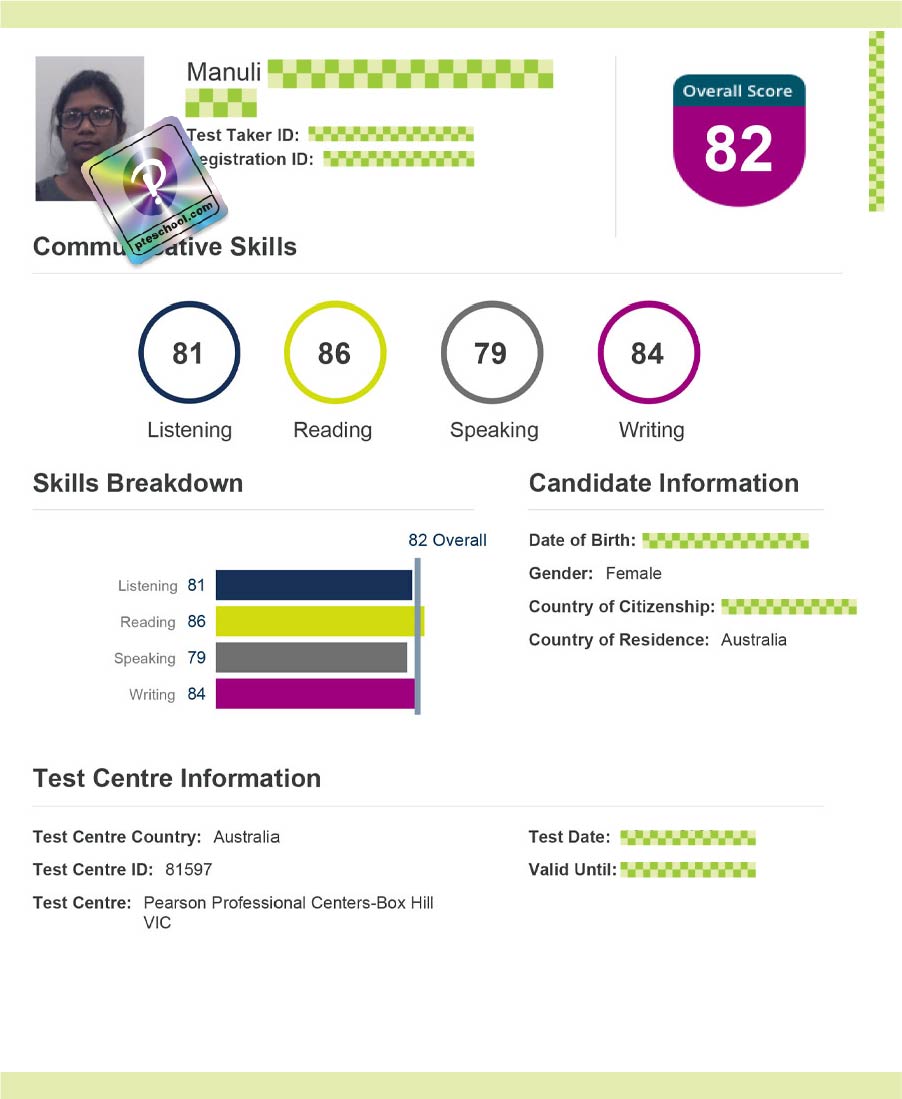

You’ve just received your PTE Academic score report. Your eyes scan the screen, a mix of excitement and confusion. A stellar 90 in Speaking! An impressive 86 in Listening! You feel a surge of confidence. But then, you see it. Reading: 65. Writing: 70. Your heart sinks. The target was 79+ in all sections—the golden ticket to an extra 20 PR points.
What went wrong? How can you be a near-perfect speaker but fall so short in reading and writing?
This scenario is incredibly common, and it stems from a fundamental misunderstanding of how the PTE scoring system works. Your 90 in Speaking isn’t a lie, but it’s telling you a different story than you think.
Recently, a student shared this exact predicament with me. His score profile was L:86, R:65, S:90, W:70. Based on an analysis of his detailed skills profile, we pinpointed the exact reasons for the score gap. This blog post is a detailed breakdown of that analysis. We will dissect your score report, expose the hidden connections between sections, and give you a clear, actionable blueprint to turn those 65s and 70s into the 79+ you need.
The Great Deception: Understanding Your 90 in Speaking
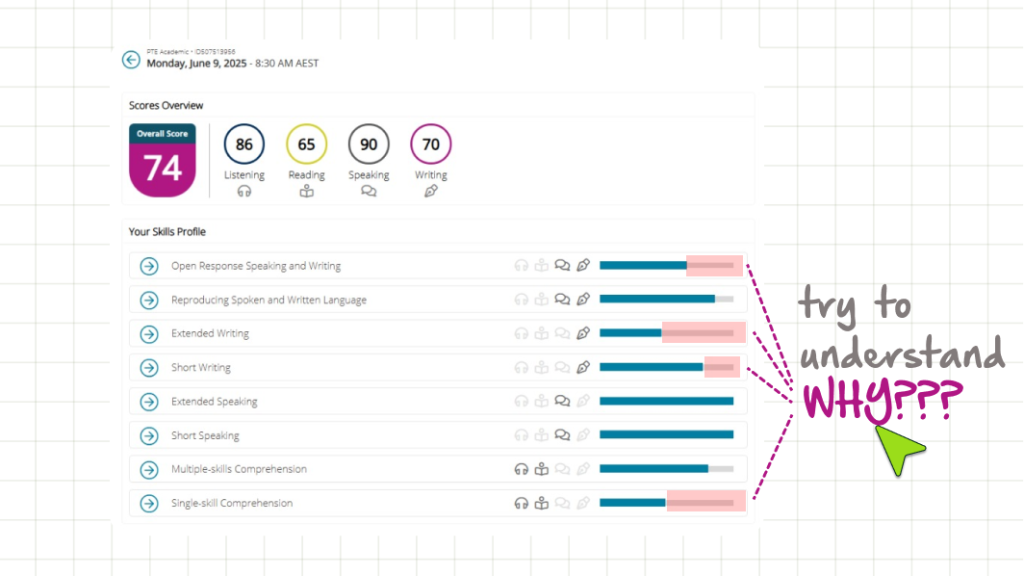
The first thing we need to address is the most misleading score on your report: that perfect 90 in Speaking. You see 90 and think, “I’ve mastered this section. I don’t need to change anything.” This is the single biggest mistake holding you back.
To understand why, let’s look at your PTE Skills Profile. The speaking score is heavily influenced by two key areas:
- Extended Speaking: This measures your ability to speak for a sustained period (around 40 seconds). This score is almost entirely based on your oral fluency—how smoothly and continuously you speak. In tasks like Describe Image and Re-tell Lecture, as long as you keep talking without hesitation, you can score very high here. The student in our case study scored a full 90/90 in this area.
- Short Speaking: This primarily reflects your performance in Repeat Sentence and Answer Short Question. Again, fluency and quick, accurate repetition are key.
You aced these. You are fluent. You can speak without stopping. The PTE algorithm loves this and has rewarded you with a 90.
However, there is a third, critically important component: Open Responses (Speaking and Writing). This is where the problem begins. The very first task in the PTE exam, Read Aloud, falls into this category. And Read Aloud is the bridge that connects your Speaking score to your Reading score.
The Real Reason Your Reading Score is 65: A Flawed Read Aloud
You might be thinking, “But if I got 90 in Speaking, my Read Aloud must have been great!” Not necessarily. You got 90 because you were fluent. But Read Aloud doesn’t just test fluency; it tests your ability to read a text correctly and clearly, as if you were communicating its meaning to someone. It contributes approximately 30-40% of its marks directly to the Reading section.
Here’s an analogy: Imagine being asked to sing a song. You could sing it with a perfect, uninterrupted rhythm but mumble all the words. You would be marked high on “rhythm” (fluency), but you would fail on “lyrics” (content).
This is what’s happening in your Read Aloud. You are speaking smoothly, but you are likely failing in one or more of these areas:
- Clarity and Pronunciation: You might be speaking so fast for the sake of fluency that you are swallowing words, mispronouncing key terms, or not enunciating clearly. The algorithm needs to understand the words you are saying to give you marks for content.
- Chunking and Pacing: Natural speech has a rhythm. We pause at commas, take a slightly longer breath at full stops, and group words into meaningful phrases (“chunks”). Many students, in their quest for speed, read in a robotic, monotonous stream. This unnatural delivery tells the system that you don’t comprehend the text’s structure, costing you valuable reading points.
- Conversational Tone: You need to sound like you are communicating information, not just racing through a block of text. This involves using intonation—letting your voice rise and fall naturally.
The hard truth is that you likely lost 10-15 marks from your Reading score before you even got to the first Reading-only question. Many students get 90 in Speaking multiple times while consistently failing to get 79 in Reading. The day they fix their Read Aloud is the day they see their Reading score jump.
Action Plan for Read Aloud:
- Slow Down: Speed is not the goal. Clarity is. Aim for a natural, conversational pace.
- Practice Chunking: Before reading a text, identify the commas, full stops, and logical phrases. Practice pausing at these points. Record yourself and listen back. Do you sound like a robot or a human?
- Focus on Enunciation: Open your mouth and pronounce every word distinctly. Pay special attention to the beginnings and endings of words (like the ‘-s’ and ‘-ed’ sounds).
- Get Expert Feedback: It’s incredibly difficult to judge your own speaking. Practice with a coach who can listen and provide specific feedback on your pacing, pronunciation, and intonation.
Cracking the Code of the 65 in Reading: Beyond Read Aloud
While fixing Read Aloud is your number one priority for a higher Reading score, it’s not the only piece of the puzzle. Your skills profile gives us another major clue.
Look at the Single-skill Comprehension bar. In the case of our student, this was hovering around 50 out of 90. This component is your “pure” reading skill. It directly reflects your performance in:
- Reading & Writing: Fill in the Blanks (Dropdowns)
- Reading: Fill in the Blanks (Drag and Drop)
These question types are a direct test of your vocabulary, grammar, and understanding of collocations (words that frequently appear together, like “make a decision” or “heavy traffic”).
If your score here is low, it means you struggled to identify the correct words to complete the sentences. While improving this area is a longer-term project, it’s essential for securing those last few points for a 79+.
Action Plan for Fill in the Blanks:
- Build Your Collocation List: Don’t just learn individual words. Learn words in phrases. Keep a dedicated notebook and every time you encounter a new collocation, write it down and use it in a sentence.
- Grammar Drills: Focus on parts of speech (nouns, verbs, adjectives, adverbs), tenses, and prepositions. Understanding grammar helps you eliminate incorrect options in the dropdowns.
- Practice, Practice, Practice: Use reliable materials to practice these question types consistently. After each attempt, don’t just check the right answer. Understand why that answer is correct and why the others are wrong.
Even with some weakness here, the fastest way to boost your Reading score from 65 to over 79 is by perfecting your Read Aloud. A 10-15 mark boost from that task alone can get you across the line.
Dissecting the 70 in Writing: It’s More Than Just Templates
Now, let’s turn our attention to the 70 in Writing. Like the Reading score, this is a result of underperformance in several key areas, many of which are outside the main “Writing” section of the exam.
Your Skills Profile reveals the weaknesses. The Extended Writing score (which is your Summarize Written Text and Essay) was low, around 45-50 out of 90 for our student. The Short Writing score also showed room for improvement.
Let’s break it down.
1. Summarize Written Text (SWT)
This task falls under Open Responses (Speaking and Writing) and contributes points to both your Reading and Writing scores. The goal is to summarize a 200-300 word passage into a single sentence between 5 and 75 words.
A common mistake is using a “copy-paste” method, where students find what they think is the topic sentence and copy it, perhaps adding another clause. This often fails because:
- It misses the core content: The summary might be grammatically correct but fail to capture the main, overarching idea of the entire passage.
- It leads to grammatical errors: Simply joining two sentences with a comma or “and” often creates a run-on or grammatically incorrect sentence.
If you are not getting good marks here, your Writing score suffers directly.
Action Plan for SWT:
- Understand, Don’t Just Copy: Read the entire passage to understand its central theme. Identify the main subject and what is being said about it.
- Synthesize Ideas: Your job is to combine the key points into one new, coherent sentence. Use connectors (e.g., ‘while’, ‘although’, ‘which’) to link ideas smoothly.
- Check Your Grammar: Ensure your single sentence is grammatically flawless. It must have one main clause and can include dependent clauses.
2. Essay (Extended Writing)
This is the most heavily weighted writing task. Many students rely on pre-memorized templates. While templates can provide structure, they are not a magic bullet. Your low score in Extended Writing suggests a problem with content.
The PTE marking engine is sophisticated. It assesses:
- Content: Did you actually answer the question? Did you acknowledge the essay prompt, develop relevant ideas, and support them with explanations or examples? Using a generic template and filling it with vague, off-topic sentences will result in a very low content score.
- Form: Did you meet the 200-300 word count?
- Grammar & Vocabulary: Is your language accurate and varied?
- Spelling: Are there any spelling mistakes?
Proofreading is critical. Rushing through the essay and leaving 5-6 spelling or grammar mistakes can be the difference between a 70 and an 80 in Writing.
Action Plan for Essay:
- Deconstruct the Prompt: Spend the first 2-3 minutes identifying the keywords and the specific question you need to answer.
- Focus on Relevant Ideas: Brainstorm 2-3 clear points that directly relate to the prompt.
- Flesh out Your Template: Use your template as a skeleton, but fill it with the flesh of your own relevant ideas and supporting details.
- Always Proofread: Leave at least 2-3 minutes at the end to read your essay carefully, hunting for spelling errors, punctuation mistakes, and grammatical slips.
3. The Hidden Writing Killers: Listening & Dictation
Your high Listening score (86) was likely boosted significantly by Repeat Sentence. However, your Writing score is being pulled down by two other tasks from the Listening section:
- Listening: Fill in the Blanks
- Write from Dictation
For every word you miss or misspell in these tasks, you lose one point for Listening and one point for Writing. Just 5-6 spelling mistakes across these two tasks could mean a 5-6 point drop in your Writing score. Given your 70, it’s highly probable that small, careless errors here are a contributing factor.
Action Plan:
- Drill Your Typing and Spelling: Practice these specific tasks with a focus on accuracy. Identify your common spelling errors and work on them.
- Use Your Erasable Noteboard: For Write from Dictation, practice jotting down the first letter of each word to help your memory before you type the full sentence.
Your Final Blueprint for 79+: From Theory to Action
We’ve covered a lot of ground. Let’s consolidate this into a clear, step-by-step action plan.
- Priority #1: Master Your Read Aloud. This is your silver bullet for the Reading score. Focus on clarity, chunking, and natural pacing. Record yourself and seek expert feedback.
- Re-learn Summarize Written Text. Ditch the copy-paste habit. Focus on understanding the passage and writing a single, grammatically perfect summary sentence.
- Elevate Your Essay Beyond the Template. Focus on developing relevant content that directly answers the prompt. Dedicate time to thorough proofreading.
- Perfect Your Short Writing Tasks. Drill Listening FIB and Write from Dictation with an intense focus on spelling accuracy.
- Validate Your Progress with a Pearson Mock Test. Avoid third-party practice portals for score prediction. Their algorithms are not the same as the real exam and can provide false confidence or despair. Purchase an official PTE Mock Test (A, B, C, D, or E).
- Record and Review. When you take the mock test, record your entire screen and audio. This recording is invaluable. Ask an experienced coach to review it, especially your Read Aloud. They can hear the subtle errors in pacing and pronunciation that an AI score report won’t tell you about.
A Final Word of Caution
Remember, the PTE does not set a permanent benchmark. A 90 in Speaking today does not guarantee a 90 tomorrow. You must continue to practice and refine all your skills. You have the potential to score 90 in every section, but it requires a smarter, more informed approach to your preparation.
Stop seeing your score report as four separate numbers. Start seeing it as an interconnected web of skills. Your path from a 65 in Reading and a 70 in Writing to that elusive 79+ is clear. It begins not in the reading section, but with the very first words you speak in the exam.
Now, go and put it into action. Your 20 PR points are waiting.