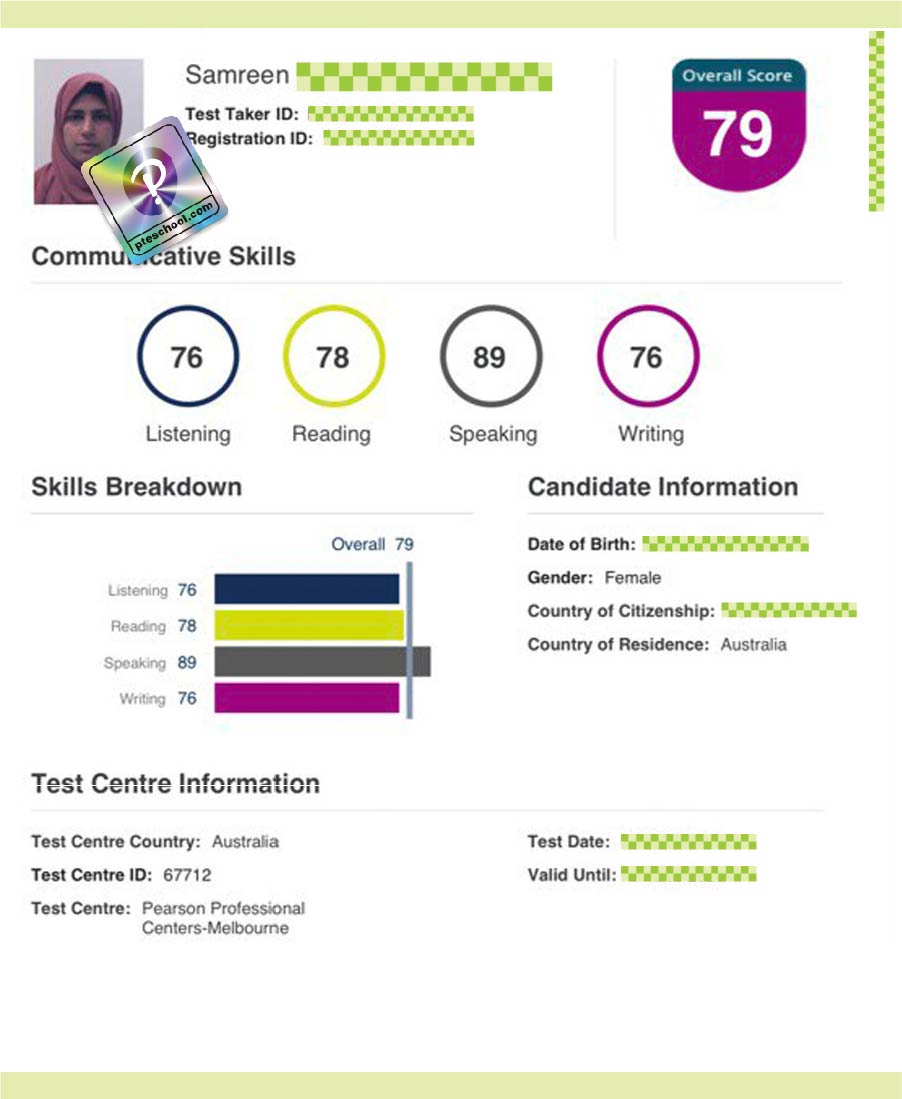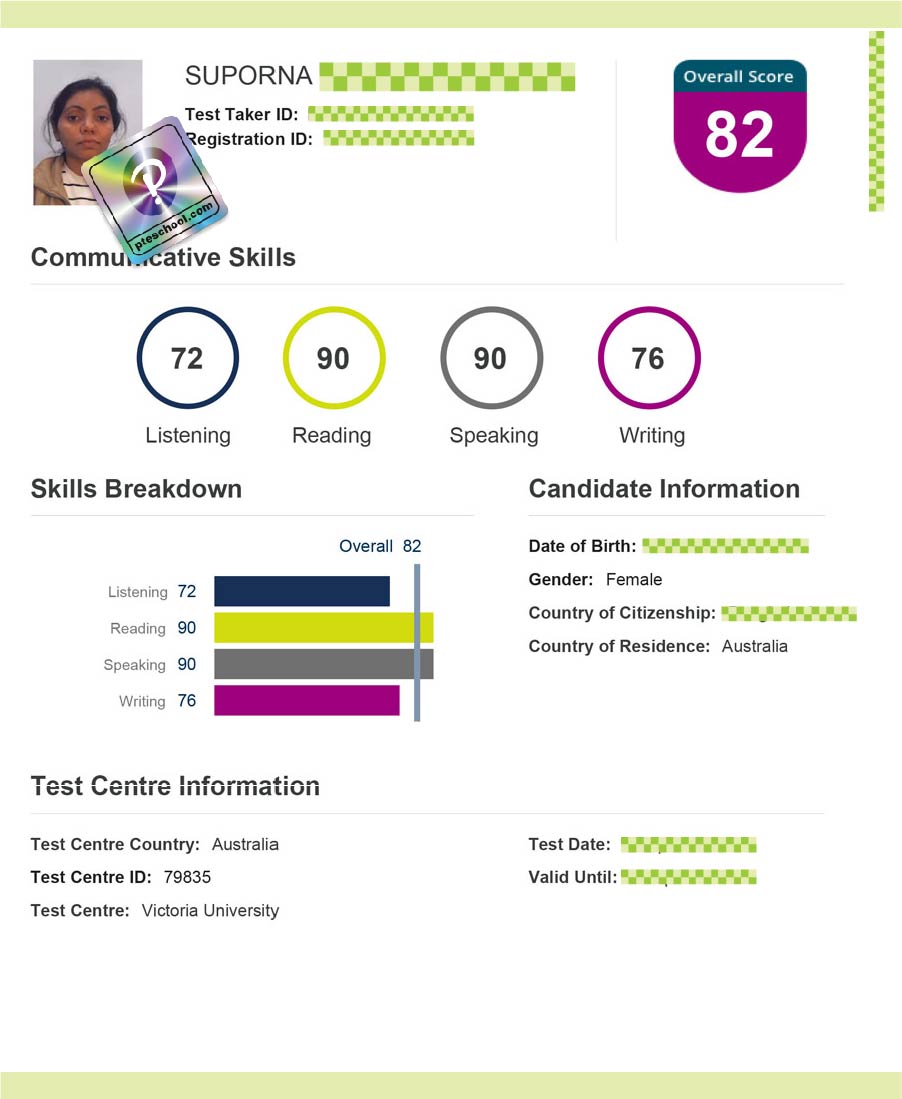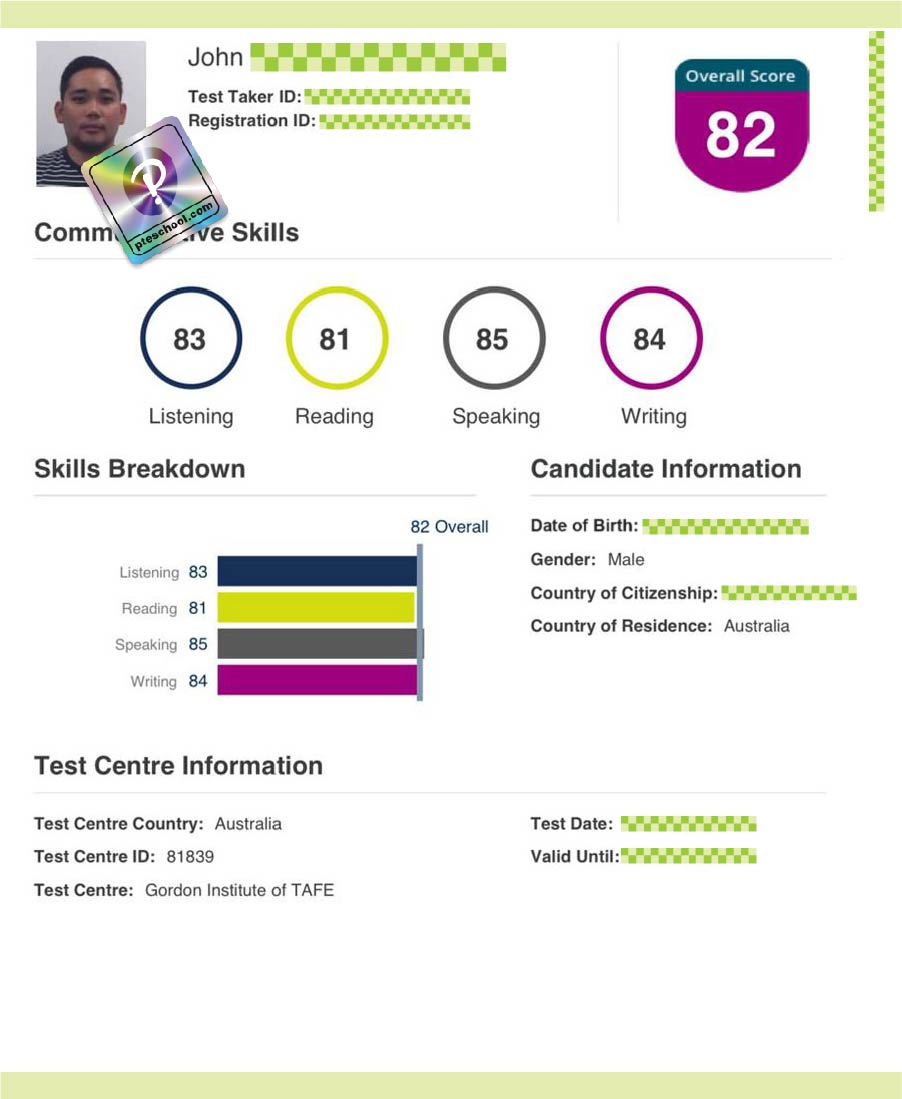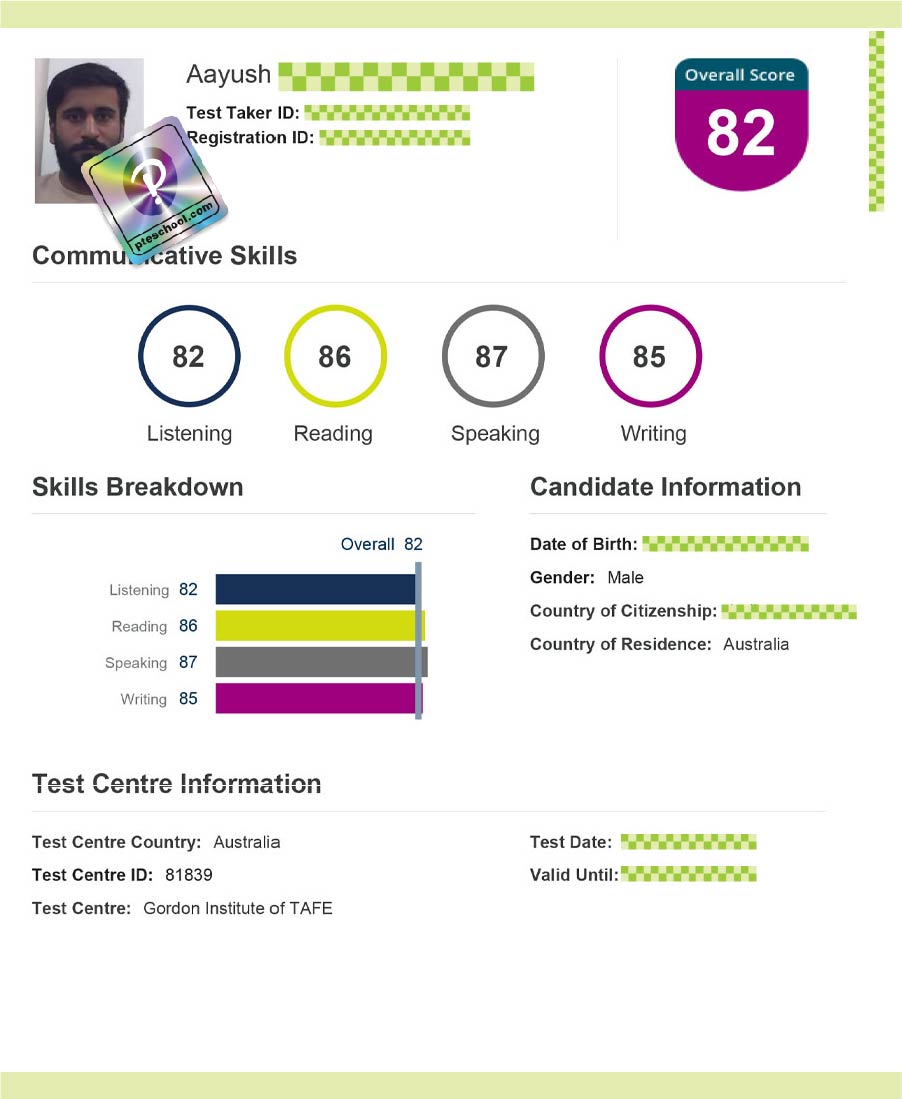
The email arrives. Your heart pounds as you click the link to your PTE Academic score report. You see the numbers, and your stomach sinks. You didn’t make it. All those hours of practice, the anxiety, and the hefty $465 exam fee—gone. It’s a devastating feeling, and as a PTE coach with over a decade of experience, I’ve seen it far too many times.
My name is Hafiz from PTE School, and since 2015, I’ve helped over 5,000 students achieve their dreams in Australia by conquering this exam. My most powerful teaching tool isn’t just the successes; it’s the failures. By understanding why a student was unsuccessful, we can build an unbeatable strategy for their next attempt.
Today, I want to share the story of my student, Shah Jahan. His case is a powerful lesson for anyone targeting that crucial score of 58 for the Temporary Graduate visa (subclass 485). He took a two-week course, learned the concepts, but ultimately, a few fundamental, repeating mistakes cost him his goal.
Let’s deconstruct his journey, pinpoint the errors, and build a definitive roadmap so that you don’t have to face the same disappointment.

Deconstructing the Score Report: The Story in the Numbers
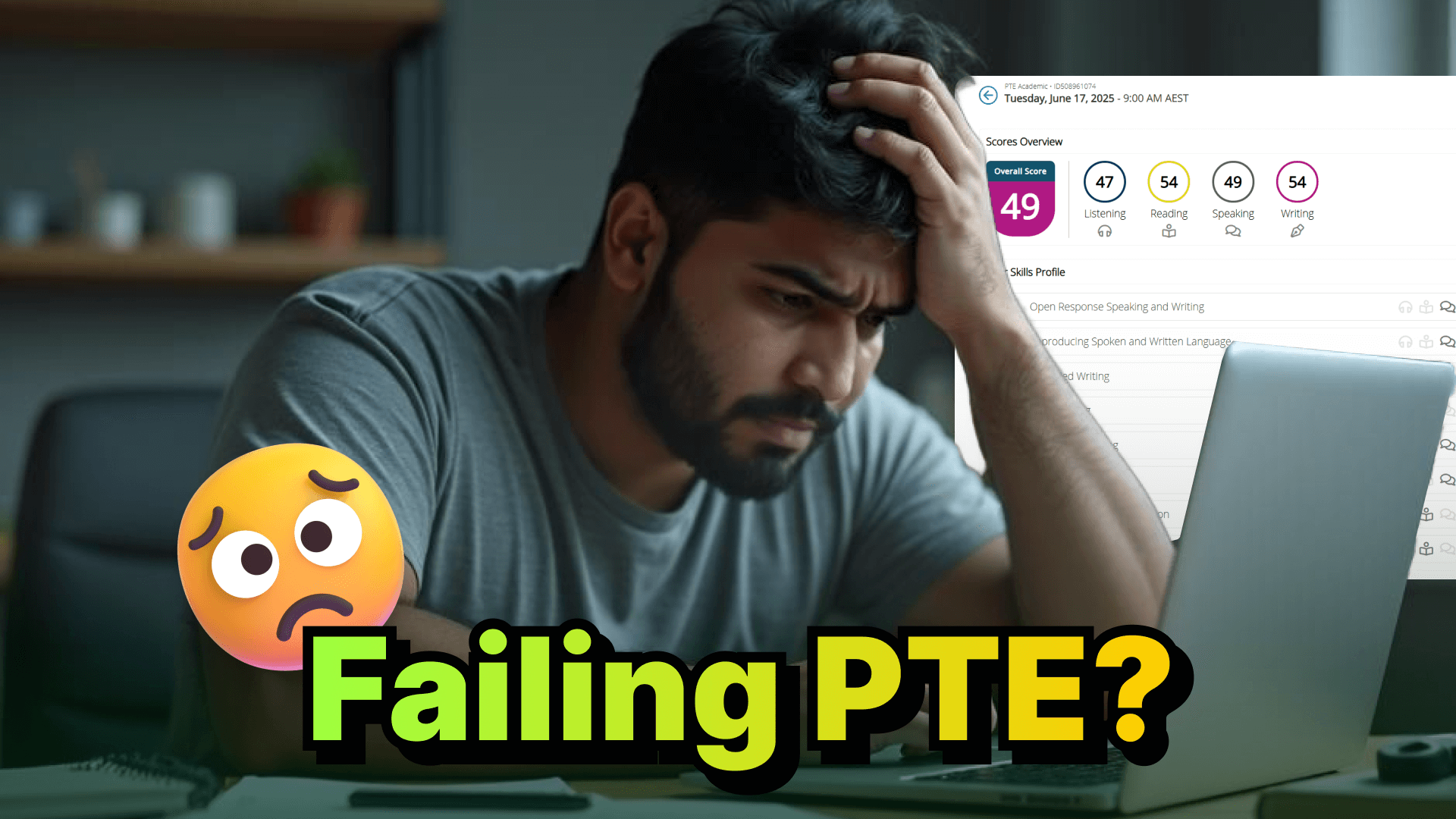
Shah Jahan’s goal was 58 across all bands. Here’s what he got:

Overall: 49
Listening: 47
Reading: 54
Speaking: 49
Writing: 54
On the surface, it looks like he was “close.” But the official PTE Skill Profile tells a much deeper story.
- Extended Speaking (Read Aloud, Describe Image, Re-tell Lecture): His score was hovering around 45-50 out of 90. This immediately told me he was not speaking continuously. The rhythm, the flow, the natural tone—it was all missing.
- Short Speaking (Repeat Sentence, Answer Short Question): His score here was also weak, close to 40 out of 90. This is a double-edged sword. A low score in Repeat Sentence devastates both your Speaking and your Listening scores. The damage is significant.
- Writing Skills: His score in “Short Writing” (impacted by Write from Dictation and Listening Fill-in-the-Blanks) was mediocre. More importantly, I could tell from the overall writing score that he likely scored no more than 5-6 out of 15 on his essay, leaving a huge number of points on the table.
The data was clear. This wasn’t a case of bad luck. It was a case of flawed technique, and the biggest culprit was in his speaking.
The #1 Mistake Killing Your Score: The “Word-by-Word” Fluency Killer
If you take only one thing away from this article, let it be this: PTE Speaking is not about speaking perfectly; it’s about speaking fluently. The scoring algorithm heavily rewards a continuous, natural, and rhythmic flow of speech.
Shah Jahan’s critical error, which I saw across his practice tests and the official mock test, was speaking word-by-word.
Let’s listen (Watch the above video 👆) to his attempt from an official Pearson mock test on a Read Aloud task:
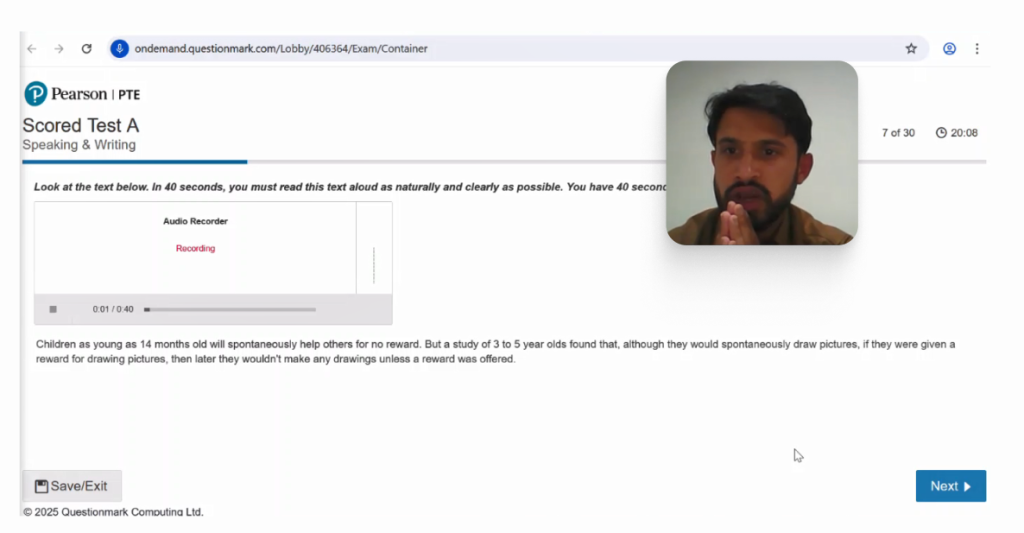
“Children… as… young… as… 14 months… old… will… help… others… for… no… reward.”
This is a fluency killer. Each word is an isolated event. The algorithm hears this as a series of pauses and hesitations, which crushes your score.
The Solution: Chunking
Fluent speakers group words into meaningful phrases, or “chunks.” They don’t pause after every word. The same sentence should sound like this:
“Children as young as 14 months old / will spontaneously help others / for no reward.”
Notice the flow? There are only two small pauses, creating a rhythm. This is what the PTE system is designed to reward.
How to Practice Chunking:
- Take any Read Aloud text.
- Use a pencil to draw slash marks (/) where you think a natural pause should be.
- Read the text aloud, only pausing at the marks.
- Record yourself and listen back. Does it sound smooth or robotic?
- Repeat until it becomes second nature.
This single change can revolutionize your Speaking score and, because Read Aloud contributes points to Reading, it will boost your Reading score as well.
The Peril of Ignoring the Blueprint: A Flawed “Describe Image” Approach
Another area where Shah Jahan struggled was Describe Image. He knew he had to speak for 40 seconds, but he fell into common traps:
- Repetitive Language: He started multiple sentences with “This image shows…” or “This image gives…” This sounds unnatural and shows a limited range.
- Word-by-Word Delivery: Just like in Read Aloud, he delivered his description word by word: “U… K… organic… livestock… numbers…”
- Abandoning the Template: I provide my students with a robust, high-scoring template for Describe Image. It’s designed to ensure fluency and cover all necessary elements (title, categories, max/min values, conclusion). In the heat of the moment, Shah Jahan abandoned this structure and tried to improvise, leading to hesitations and poor delivery.
A High-Scoring Approach:
Using a solid template removes the pressure of thinking on the spot. You simply plug in the key information from the image and focus on fluent delivery. For the same image, my delivery would be:
“The image describes UK organic livestock numbers, across different categories such as cattle, pigs, poultry, and sheep. It also provides important information that the highest contribution in the year of 2020 for sheep is approximately 3,500. On the other hand, the lowest contribution from 2011 to 2020 is the pigs, which is almost zero. After analyzing the image, it can be concluded that this image is showing some crucial information, strongly supported by important facts and figures, having a great impact on sheep and cattle.”
This is delivered fluently in under 30 seconds, hits all the key points, and uses varied language. It’s a guaranteed high score for content and fluency.
The Unseen Enemy: How Small Mistakes Ruin Other Scores
PTE is an integrated skills test. A mistake in one area often causes a ripple effect.
- Poor Read Aloud → Lowers Reading Score.
- Poor Repeat Sentence → Lowers Listening Score.
- Spelling mistakes in Write from Dictation & Listening Fill-in-the-Blanks → Lowers BOTH Listening and Writing scores.
Shah Jahan’s spelling mistakes alone likely cost him up to 10 marks across Writing and Listening. His speaking flaws cost him dearly in Speaking and Reading. It all adds up, and it’s the difference between a 49 and a 58.
Your Roadmap to a First-Attempt Pass: The Do’s and Don’ts
Based on Shah Jahan’s experience, here is my ultimate list of do’s and don’ts for your PTE preparation.
| 👍 DO’S | 👎 DON’TS |
| Follow your coach’s advice religiously. Don’t mix your old habits with new, proven strategies. | Don’t rush into the exam. Your $465 is on the line. Be sure you are consistently hitting your target in mock tests. |
| Master the art of “chunking”. Practice speaking in phrases, not isolated words. | Don’t speak word-by-word. This is the fastest way to get a low fluency score. |
| Use a structured template for tasks like Describe Image. It frees you up to focus on fluency. | Don’t try to “wing it” or improvise on tasks that have a proven formula. |
| Take an official Pearson Mock Test. This is the most accurate predictor of your final score. | Don’t rely solely on third-party practice portal scores. They can create a false sense of security. |
| Focus on fixing foundational problems. Don’t just learn “tips and tricks.” | Don’t compare yourself to your friends or family. Your journey and your weaknesses are unique to you. |
| Seek manual, expert feedback. An AI can’t tell you why you sound hesitant. A human coach can. | Don’t keep practicing without feedback. You will only reinforce your mistakes. |
Your Final Step-by-Step Action Plan
If Shah Jahan’s story resonates with you, here is what you need to do right now.
- Solve the Problem, Don’t Just Treat the Symptoms: Acknowledge that you may have a foundational issue with speaking, writing, or listening.
- Prove Your Progress: Don’t just feel ready. Prove it. Work on your weaknesses, practice consistently, and then validate your skills with mock tests.
- Get Expert Feedback: You cannot fix mistakes that you don’t know you’re making. This is non-negotiable.
- Take the Exam with Confidence: Walk into that test centre knowing you have done the hard work, fixed your errors, and are fully prepared to succeed.
Passing the PTE Academic is not about being a native English speaker. It’s about understanding the test and mastering the techniques required to score well. Shah Jahan is a quick learner with great potential. With a renewed focus on these core fundamentals, I have no doubt he will achieve his 58 on the next attempt.
And you can too.